November 14, 2026
·6 min read
PT-141 Calculator: Dosage & Reconstitution Guide
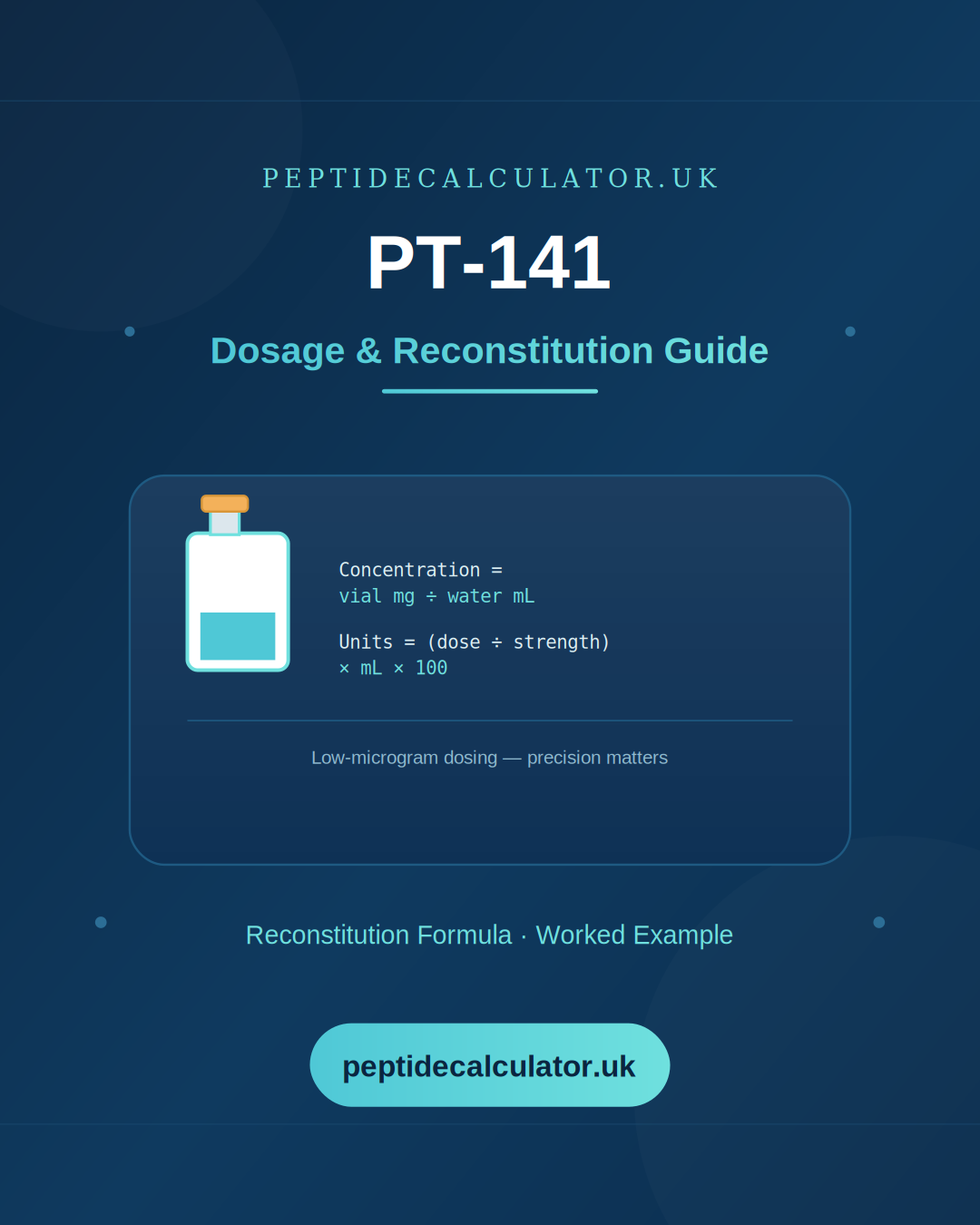
PT-141 dosing requires precise microgram-level accuracy. This guide covers the calculator formula, a full worked example, and reconstitution guidance.
Open BlogPeptide Blog
Browse blog posts covering peptide reconstitution, syringe unit calculations, concentration math, peptide mixing guides, and research-use educational content.
November 14, 2026
·6 min read
PT-141 dosing requires precise microgram-level accuracy. This guide covers the calculator formula, a full worked example, and reconstitution guidance.
Open Blog
November 14, 2026
·7 min read
Sermorelin is a commonly used GHRH-analog peptide, and getting the vial math right is essential for consistent dosing. This guide covers the calculator formula, a full worked example, and vial size guidance.
Open Blog
November 14, 2026
·8 min read
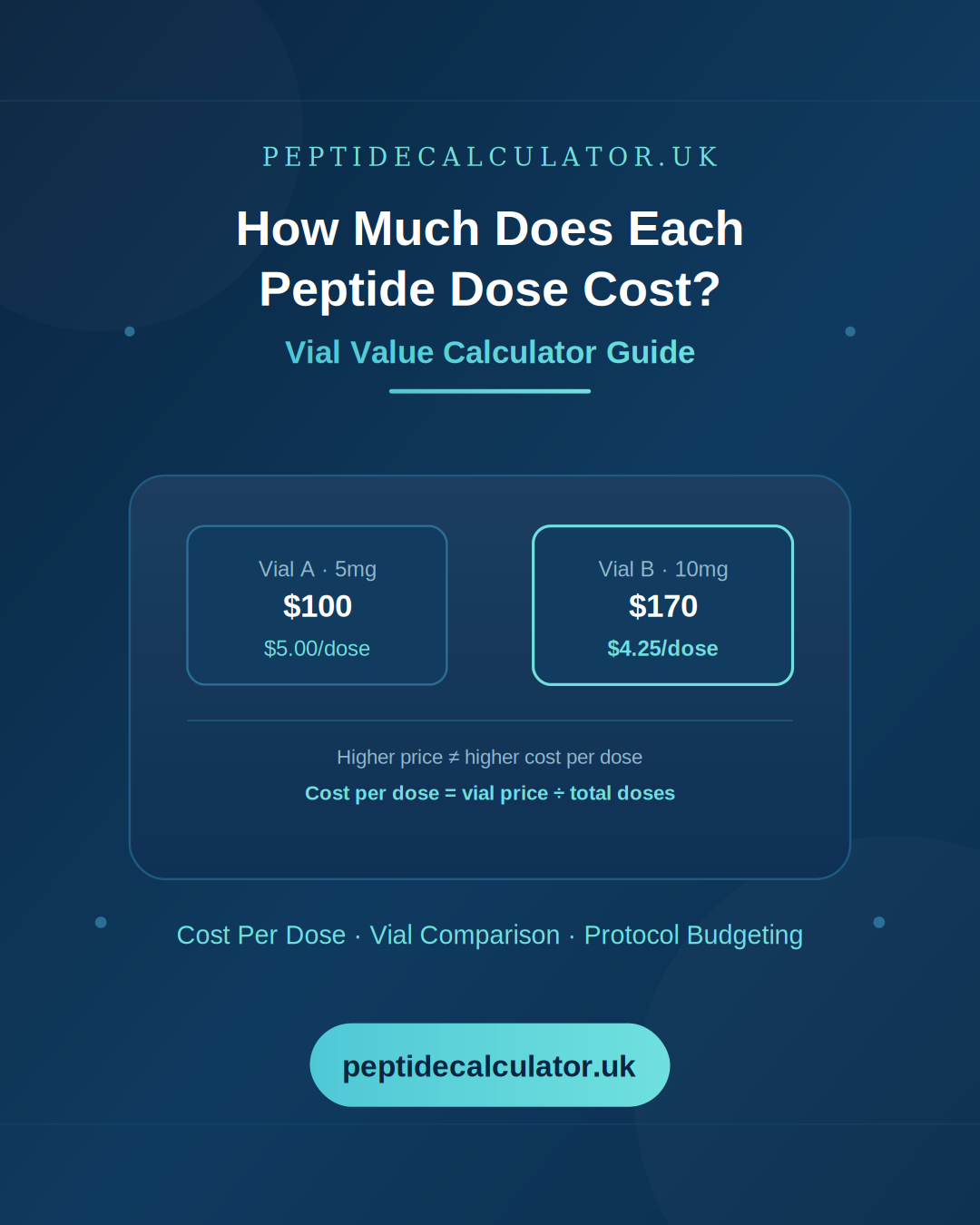
A $150 vial isn't automatically cheaper than a $220 one — it depends on how many doses each provides. This guide walks through the exact formula to calculate true cost per dose so you can compare vials like-for-like
Open Blog
November 13, 2026
·6 min read
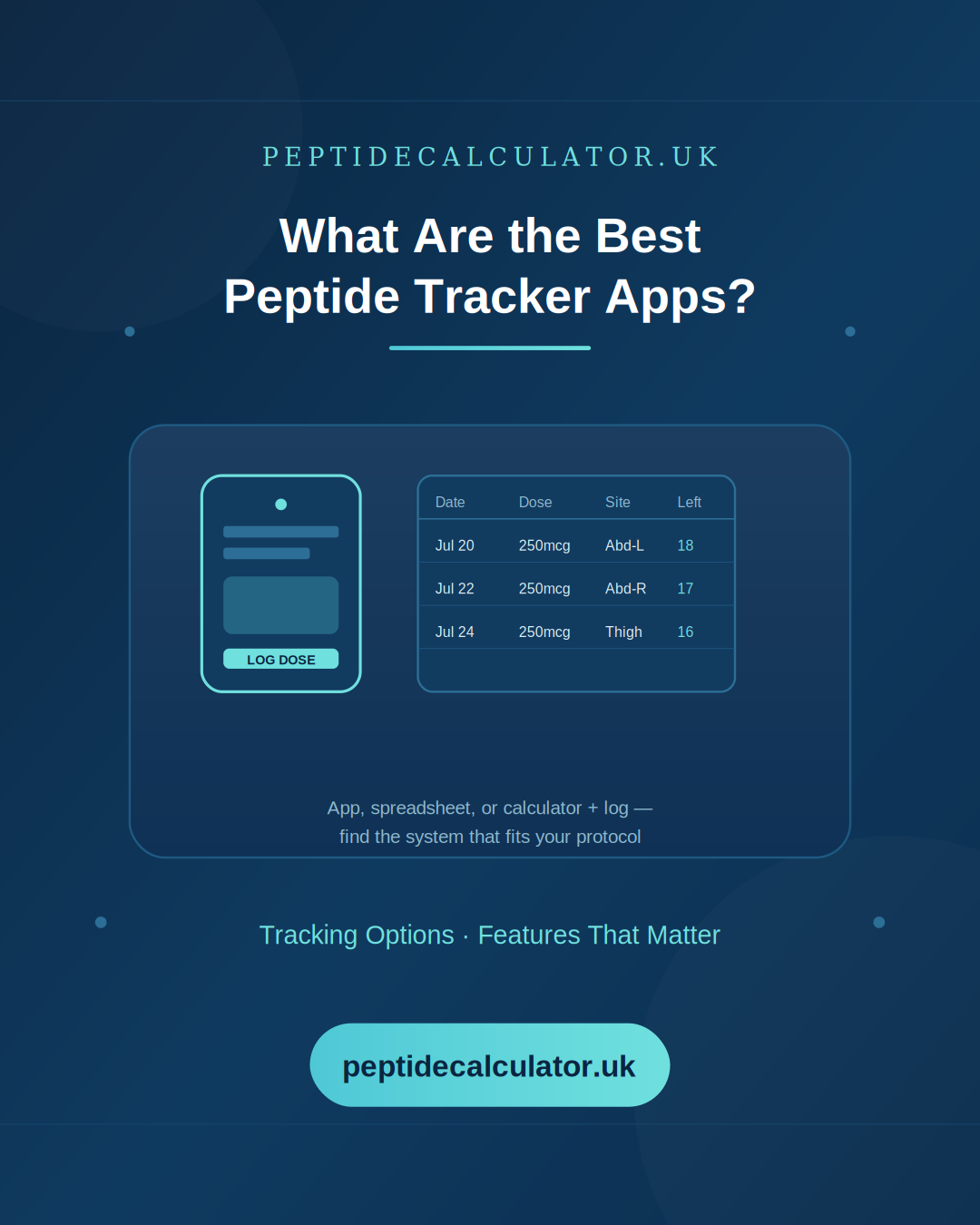
Once you're managing more than one peptide, memory stops being a reliable tracking system. This guide covers what to look for in a peptide tracker — app, spreadsheet, or calculator-plus-log — and the features that matter most.
Open Blog
November 12, 2026
·2 min read
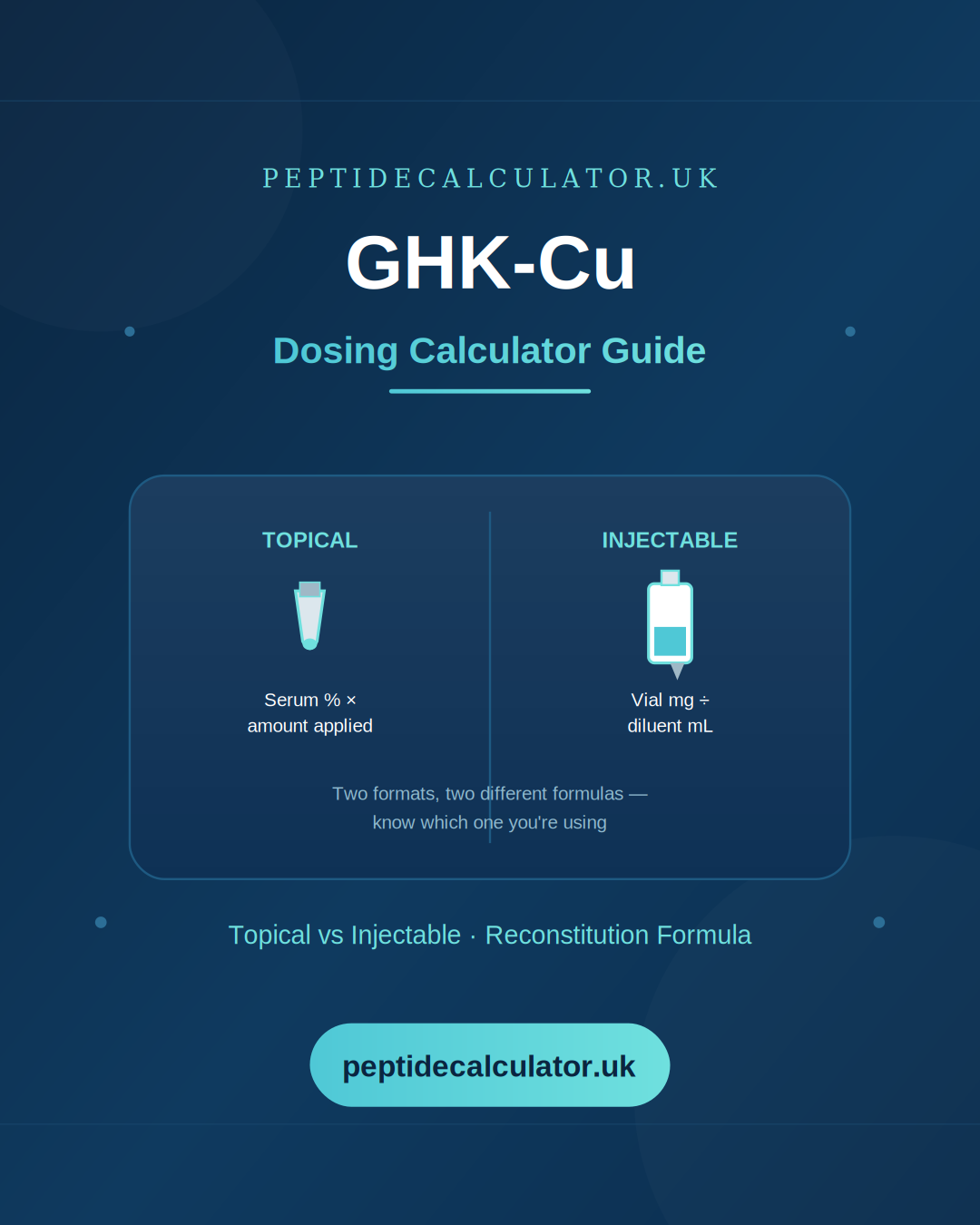
HK-Cu is used both topically and via injection, which changes how its dosing math works. This guide breaks down the calculator formula for each format and a full worked example.
Open Blog
November 12, 2026
·6 min read
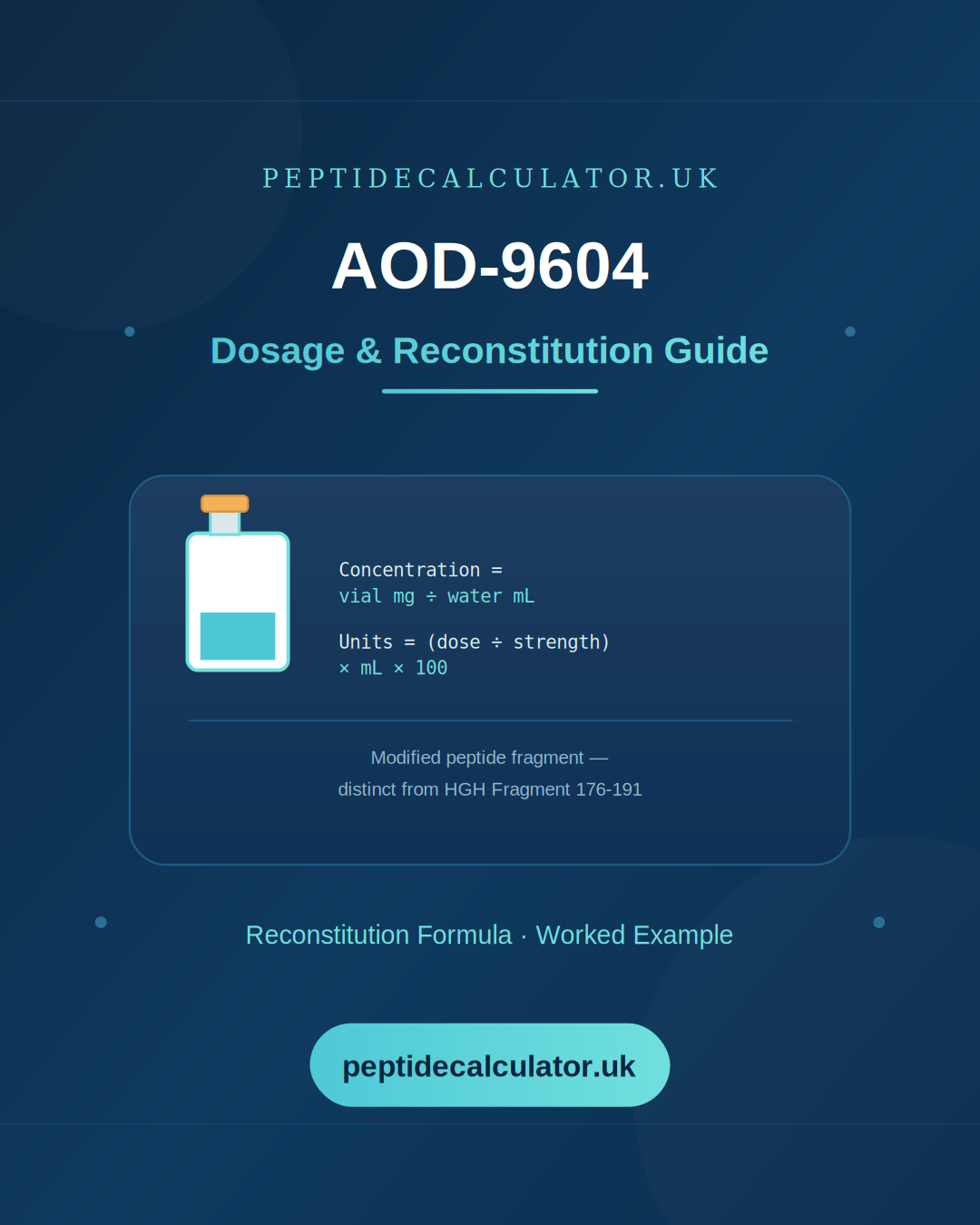
AOD-9604 dosing requires accurate microgram-level calculation, and it's often confused with its close relative, HGH Fragment 176-191. This guide covers the formula, a worked example, and how to keep the two compounds' math separate.
Open Blog
November 7, 2026
·6 min read
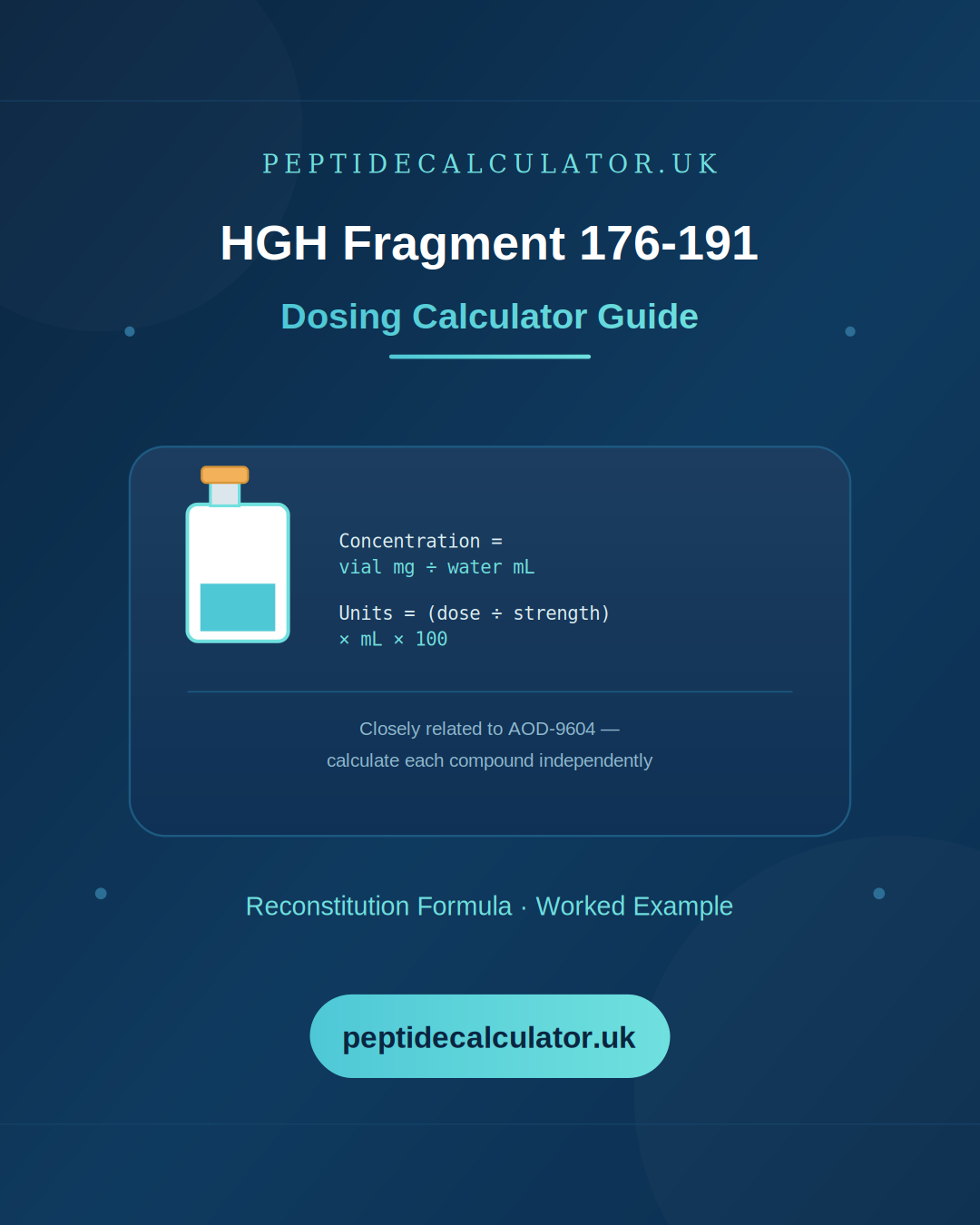
HGH Fragment 176-191 is a modified peptide requiring precise reconstitution math, and it's closely related to — but distinct from — AOD-9604. This guide covers the calculator formula, a full worked example, and common dosing mistakes.
Open Blog
November 7, 2026
·10 min read
Getting peptide dosage wrong is one of the most common (and costly) mistakes in reconstitution. This guide breaks down exactly how a peptide calculator works, the formulas behind it, and a step-by-step walkthrough of reconstituting peptides correctly — so every dose you draw is accurate.
Open Blog
November 7, 2026
·7 min read
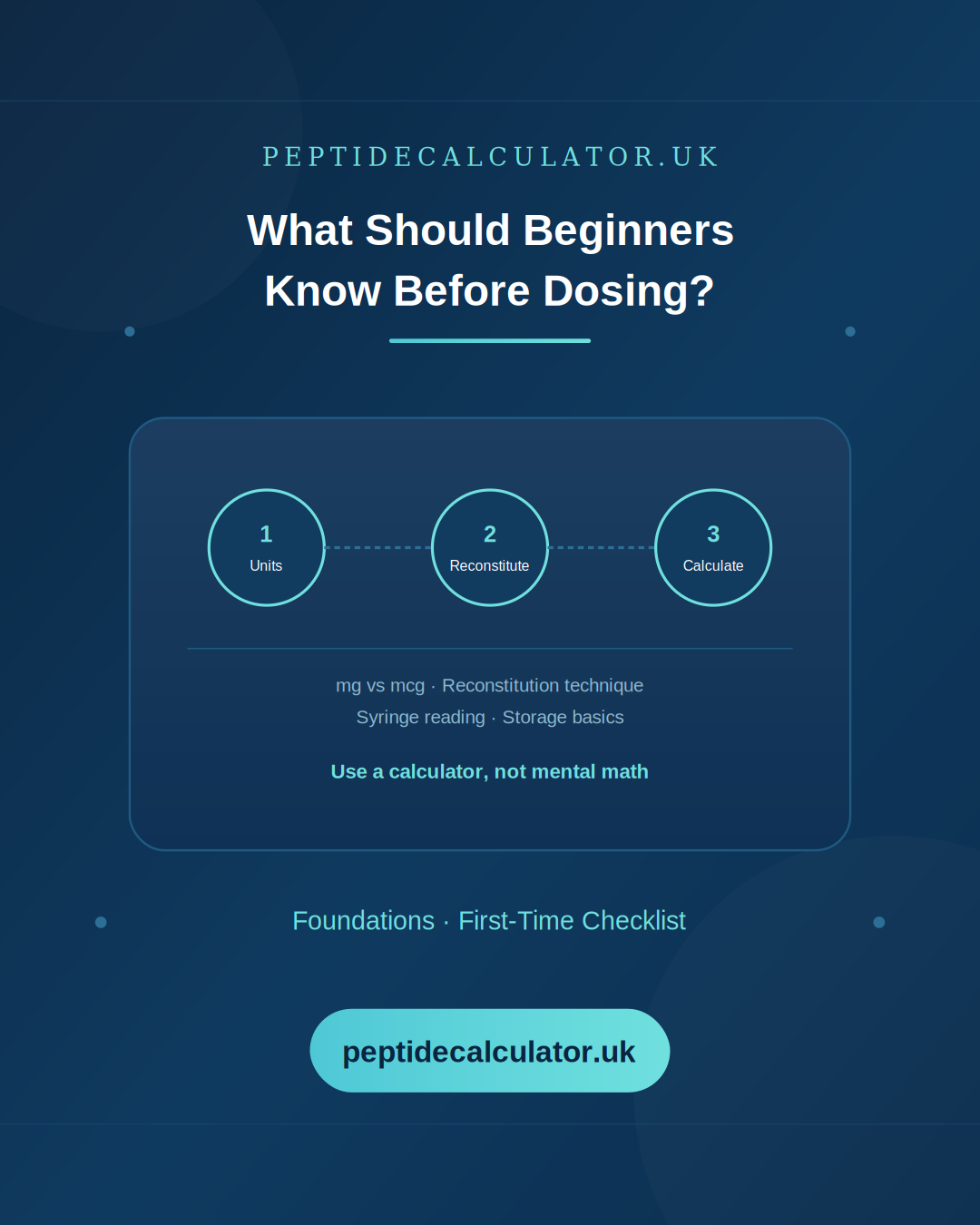
Starting with peptides can seem overwhelming, especially when you're faced with unfamiliar concepts like milligrams (mg), micrograms (mcg), syringe units, reconstitution, and proper storage. Understanding these basics before preparing your first dose can help you avoid common calculation mistakes and build confidence in the process. This beginner-friendly guide explains the essential foundations of peptide dosing, including how unit conversions work, why reconstitution affects concentration, how to read syringe units correctly, and why using a peptide calculator is more reliable than manual calculations. You'll also learn about the basic supplies commonly used for reconstitution, proper storage after mixing, and a practical first-time checklist designed to help beginners stay organized. Whether you're learning about peptide calculations for the first time or looking to better understand the terminology, this guide provides a clear educational overview. Pair it with the free tools at PeptideCalculator.uk to calculate reconstitution volumes, convert doses, determine syringe units, and simplify peptide calculations accurately. This article is intended for educational purposes only and does not constitute medical advice. Always consult a qualified healthcare professional regarding medical decisions.
Open Blog
November 7, 2026
·11 min read
Learn how to reconstitute peptides correctly with a free peptide dosage calculator. Step-by-step formulas, dosing mistakes to avoid, and safety tips.
Open Blog
November 7, 2026
·6 min read
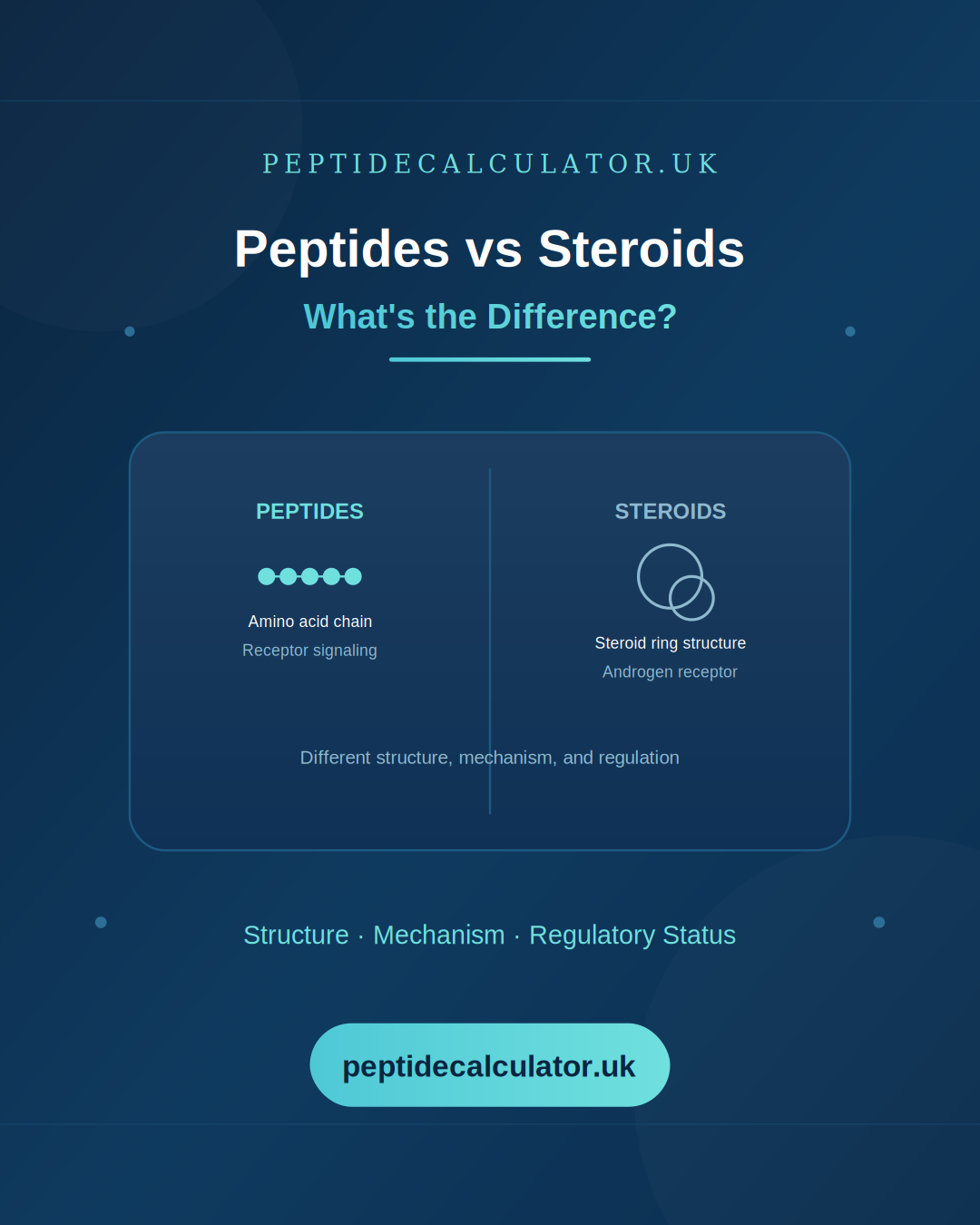
Peptides and anabolic steroids are frequently mentioned together in discussions about fitness, recovery, and performance, but they are fundamentally different classes of compounds. Understanding these differences is essential for anyone researching peptide science or learning about how these molecules work. This educational guide explains what peptides are, what anabolic steroids are, and how they differ in molecular structure, biological mechanisms, administration methods, and regulatory status. It also explores why these compounds are often discussed together, highlights common misconceptions, and answers frequently asked questions to help readers better understand the science behind each category. Whether you're new to peptide education or looking to expand your knowledge, this guide provides a clear overview without oversimplifying the topic. You can also use the free tools available at PeptideCalculator.uk to calculate peptide reconstitution, dosage conversions, syringe units, and other peptide-related calculations while exploring our growing library of educational resources. This article is intended for general educational purposes only. It is not medical or legal advice. Always consult a qualified healthcare professional and refer to applicable regulations before making healthcare decisions.
Open Blog
October 3, 2026
·7 min read
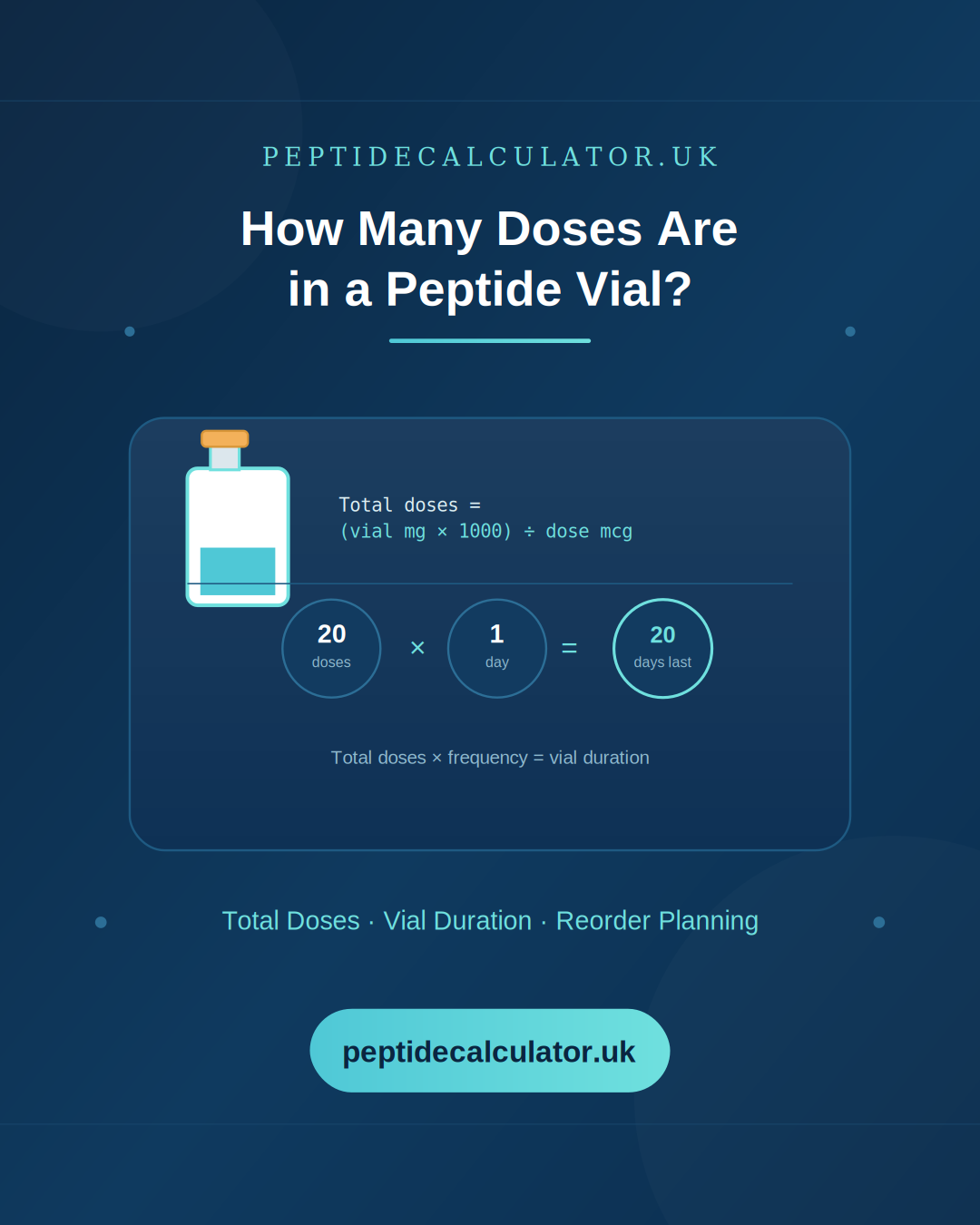
Knowing how many doses a vial provides — and how long it will actually last — helps you budget, plan reorders, and avoid running out mid-protocol. This guide covers the exact formula plus a quick reference chart.
Open Blog
October 3, 2026
·6 min read
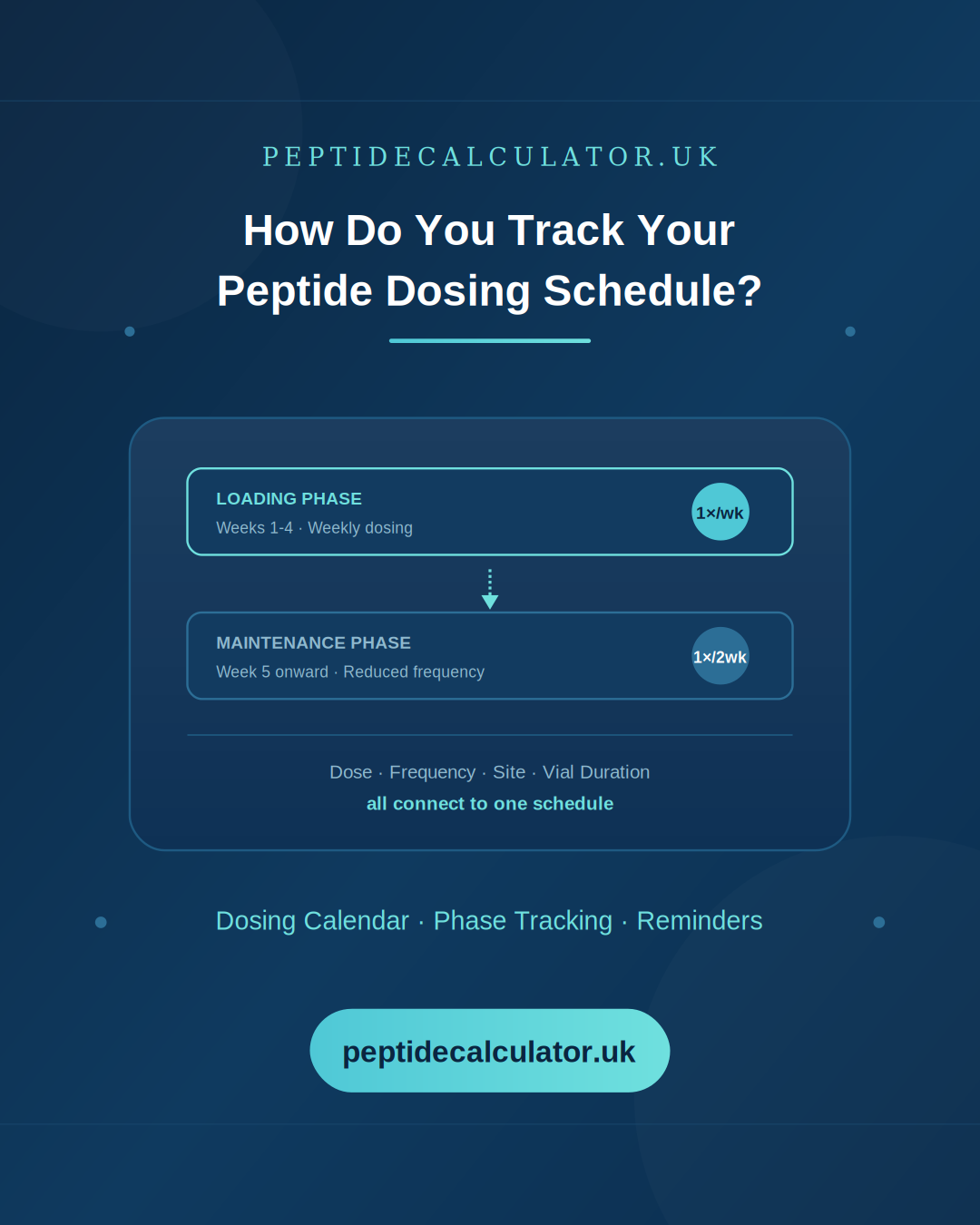
A dosing schedule is more than "when to inject" — it includes dose size, frequency, phase transitions, and vial duration. This guide walks through how to build one that actually holds up over a full protocol.
Open Blog
September 7, 2026
·6 min read
Once a peptide has been reconstituted, its storage requirements change significantly compared to its lyophilized (freeze-dried) form. Understanding how refrigeration, light exposure, diluents, and handling practices affect stability can help you plan reconstitution timing and reduce unnecessary waste. This guide explains the factors that influence the shelf life of reconstituted peptides, the differences between bacteriostatic and sterile water, proper storage recommendations, common mistakes to avoid, and visible signs that a vial should no longer be used. It also covers practical planning strategies, including how vial duration and dosing frequency work together when deciding when to reconstitute a new vial. Whether you're learning about peptide storage or looking for better organization, this educational guide provides clear explanations to help you understand the underlying concepts. You can also use the free tools available at PeptideCalculator.uk to calculate reconstitution volumes, estimate vial duration, determine doses per vial, and simplify peptide-related calculations. This content is provided for general educational purposes only and does not constitute medical advice.
Open Blog
September 7, 2026
·7 min read
* { box-sizing: border-box; } body {margin: 0;}*{box-sizing:border-box;}body{margin-top:0px;margin-right:0px;margin-bottom:0px;mar...
Open Blog
September 7, 2026
·8 min read
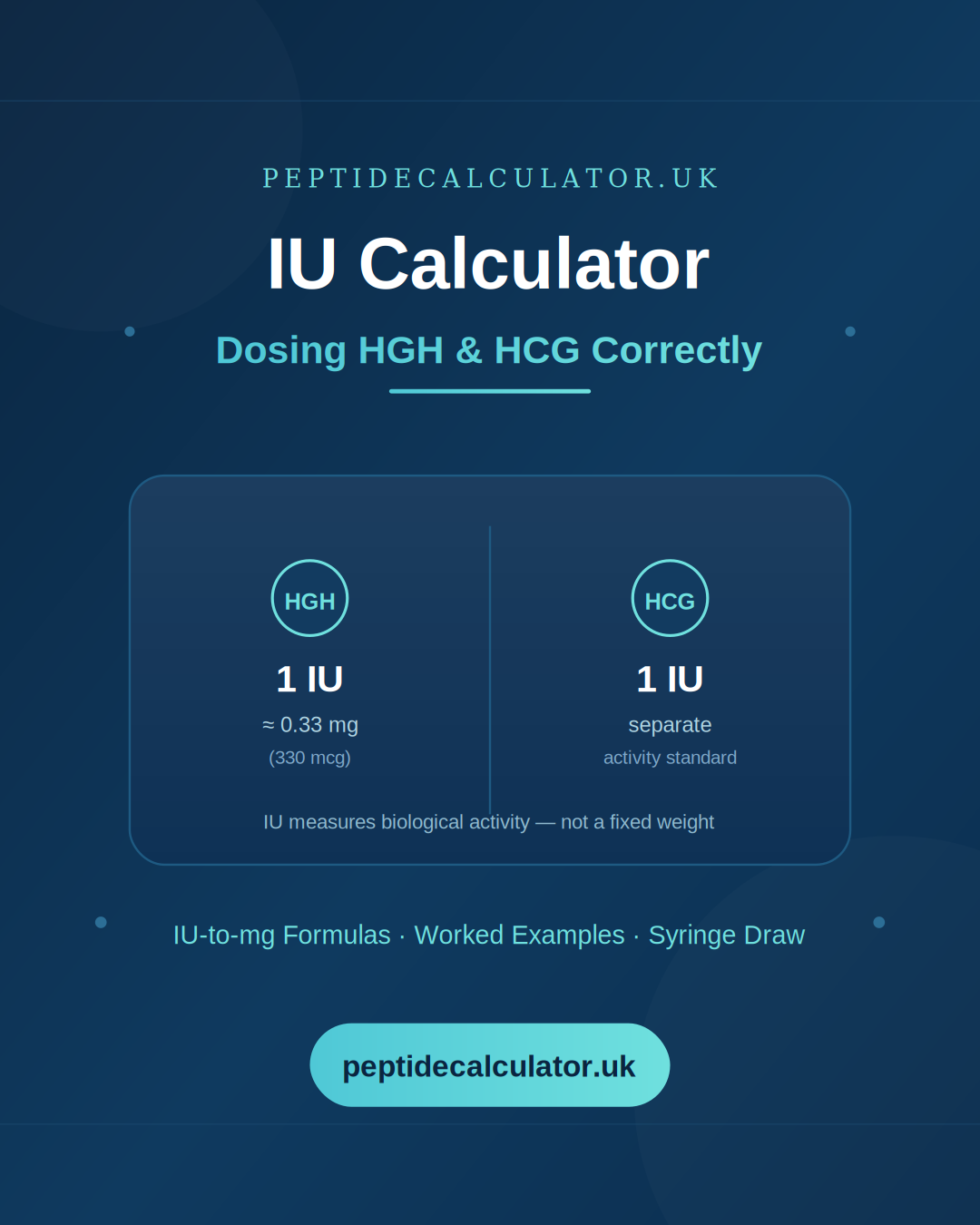
International Units (IU) aren't a fixed weight like mg or mcg — they measure biological activity, which means the conversion differs between compounds. This guide breaks down how IU dosing works for HGH and HCG specifically, with formulas and worked examples for each.
Open Blog
September 7, 2026
·5 min read
Hair growth is a narrower peptide topic than it seems, dominated almost entirely by topical GHK-Cu. This guide explains the concentration-based formula and why it's different from standard injectable dosing.
Open Blog
September 7, 2026
·5 min read
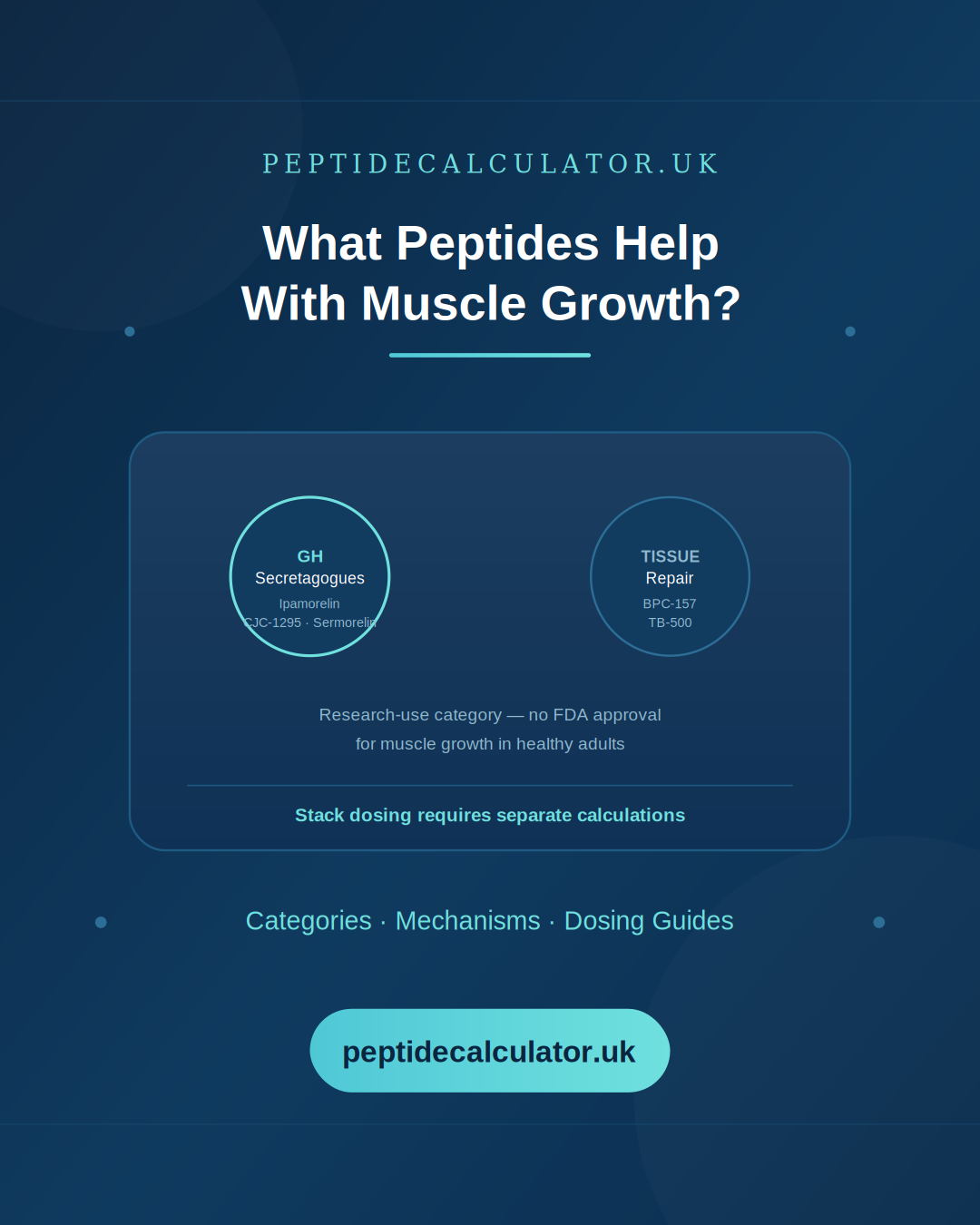
Muscle-growth peptide discussion centers on two very different categories — growth hormone secretagogues and tissue-repair compounds — neither with FDA approval for this specific use. This guide breaks down the mechanisms and evidence.
Open Blog
September 7, 2026
·7 min read
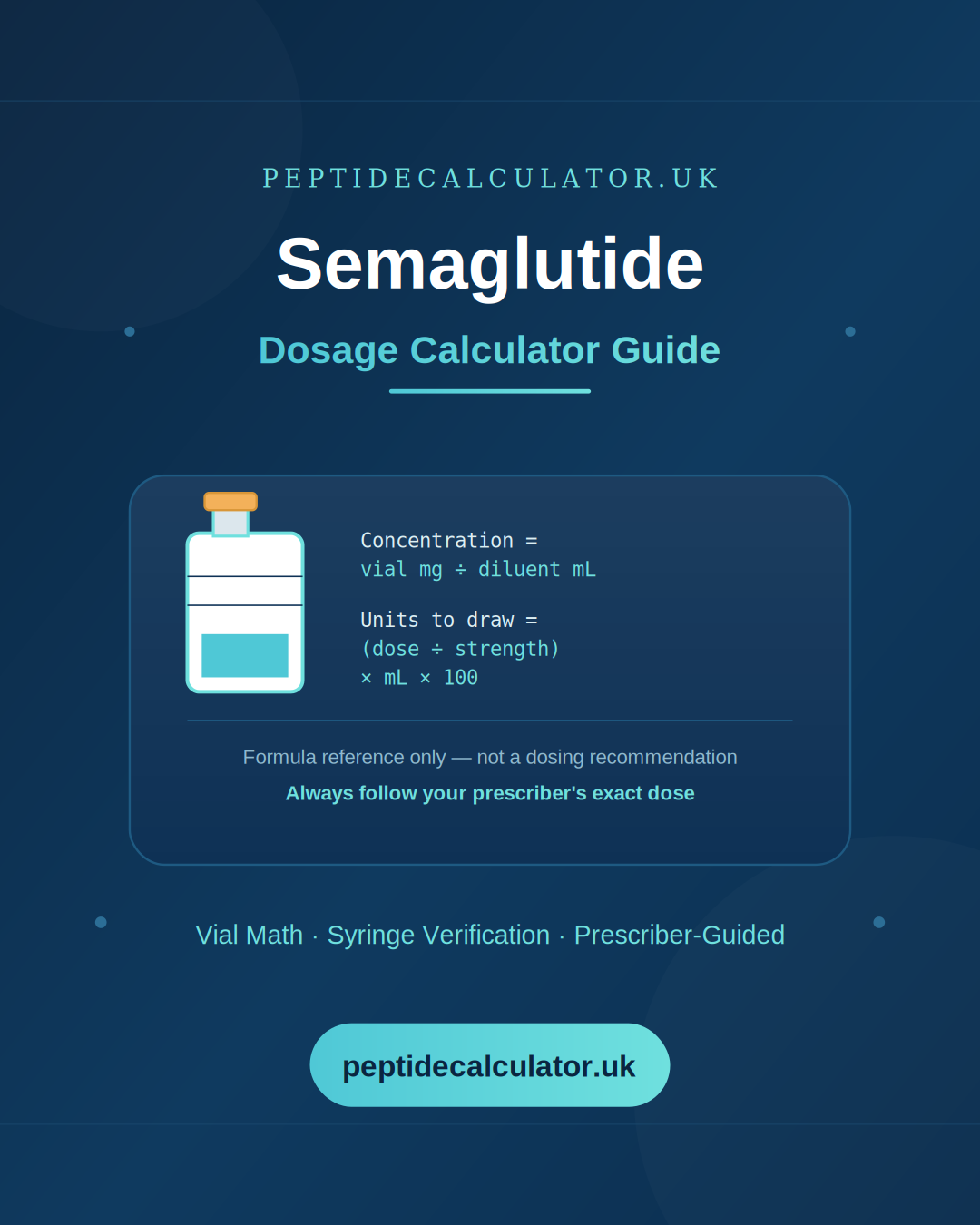
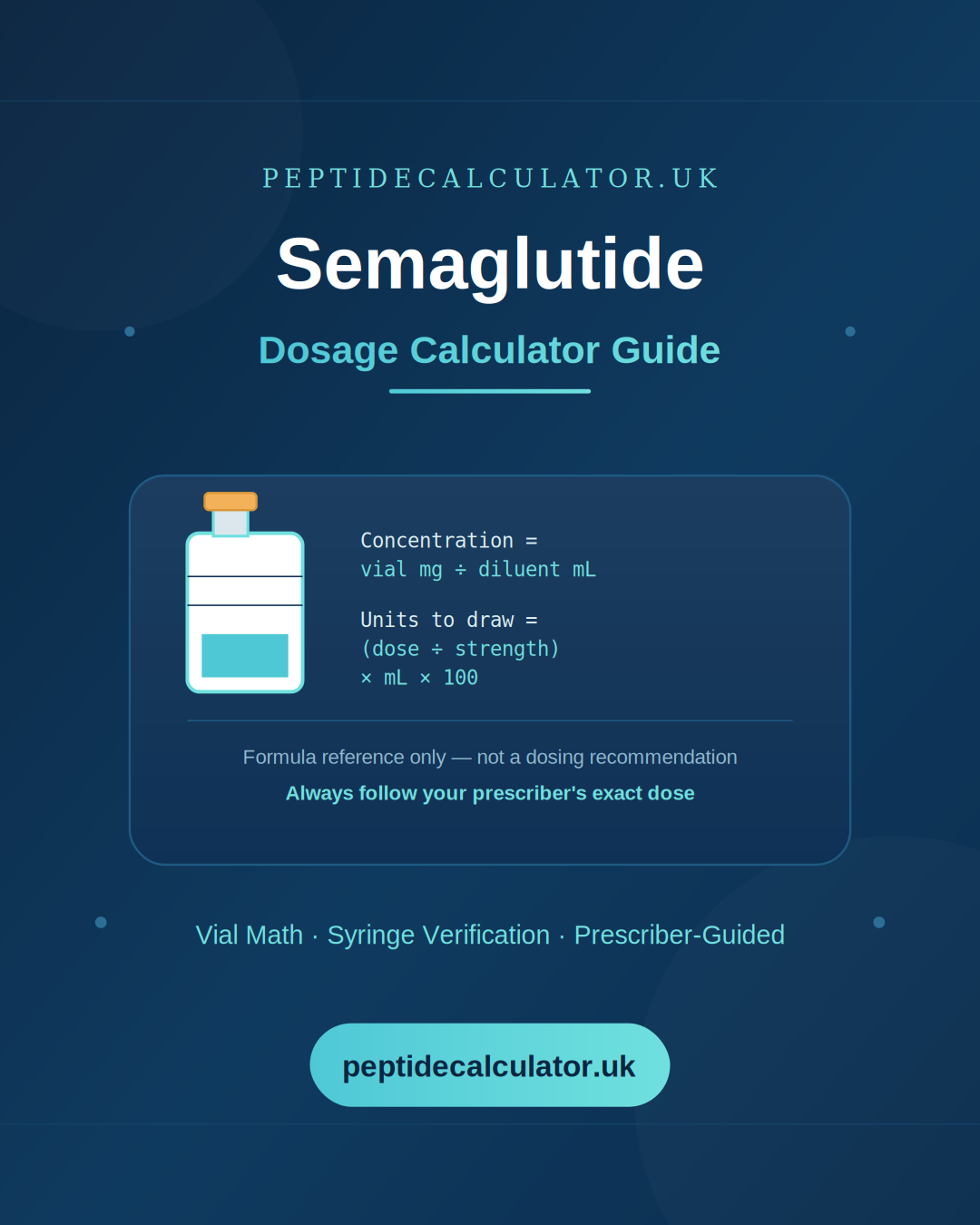
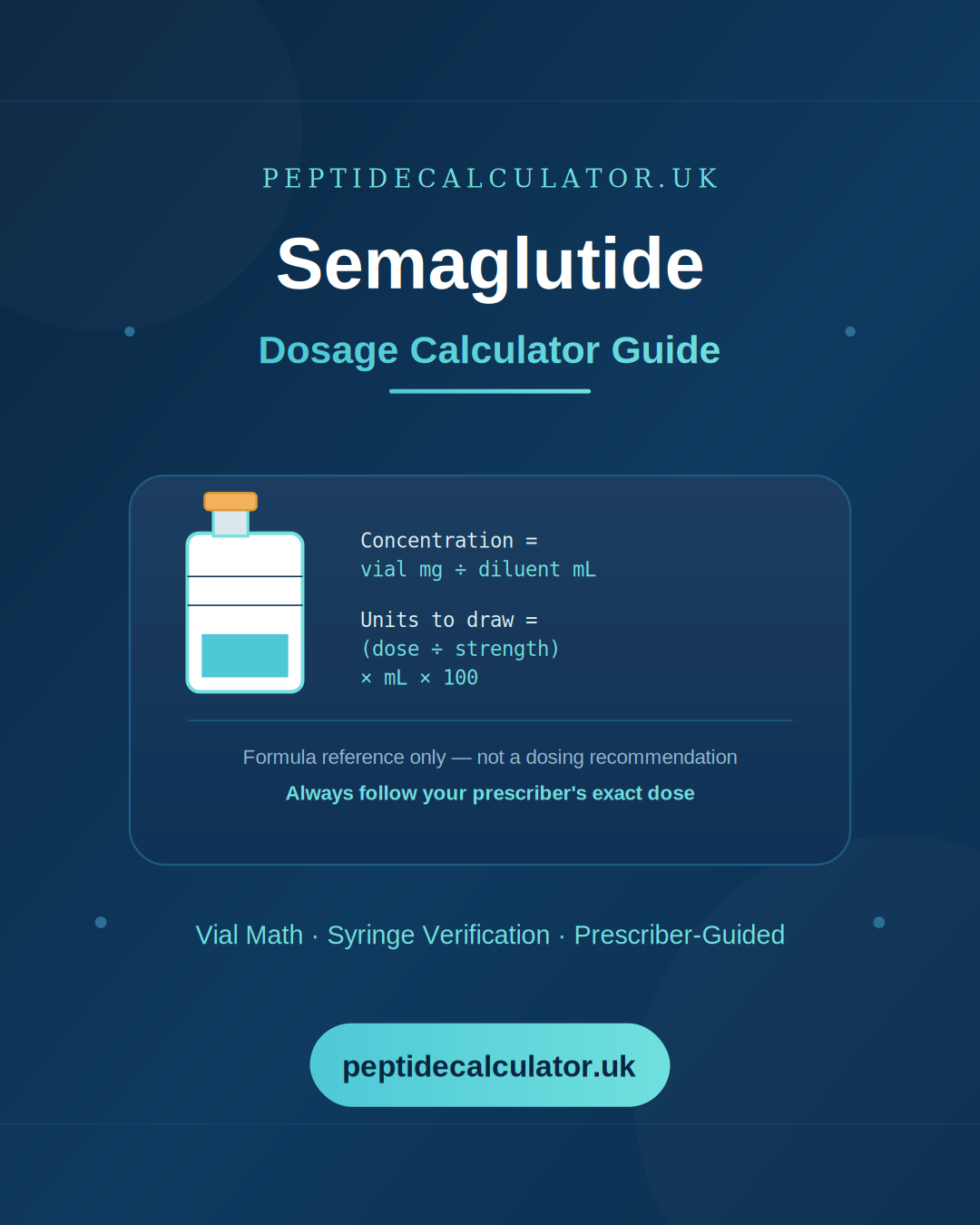
Semaglutide is one of the most searched GLP-1 medications, and vial-based dosing brings the same reconstitution math as other peptides. This guide covers the formula, an illustrative worked example, and why your actual dose should always come from your prescriber — not a general calculator.
Open Blog
September 7, 2026
·7 min read
Tirzepatide follows the same reconstitution logic as other injectable peptide-class medications, but getting the vial math right matters just as much as following your prescribed dose. This guide covers the formula, an illustrative worked example, and why your actual dose should always come from your prescriber.
Open Blog
September 7, 2026
·8 min read
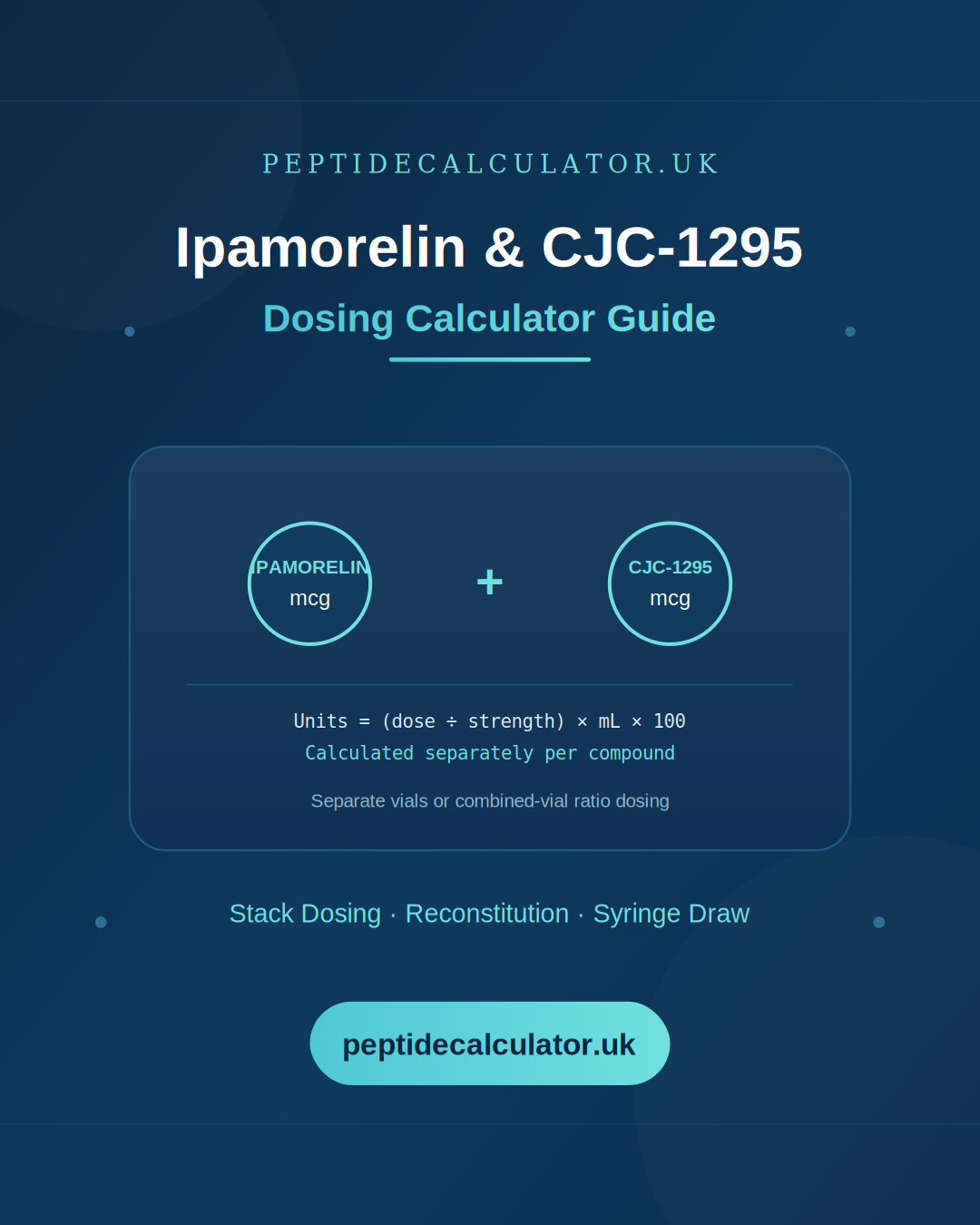
Ipamorelin and CJC-1295 are frequently used together as a growth hormone-releasing stack. This guide breaks down how to calculate each compound's dose individually, plus how combined-vial math works.
Open Blog
September 7, 2026
·8 min read
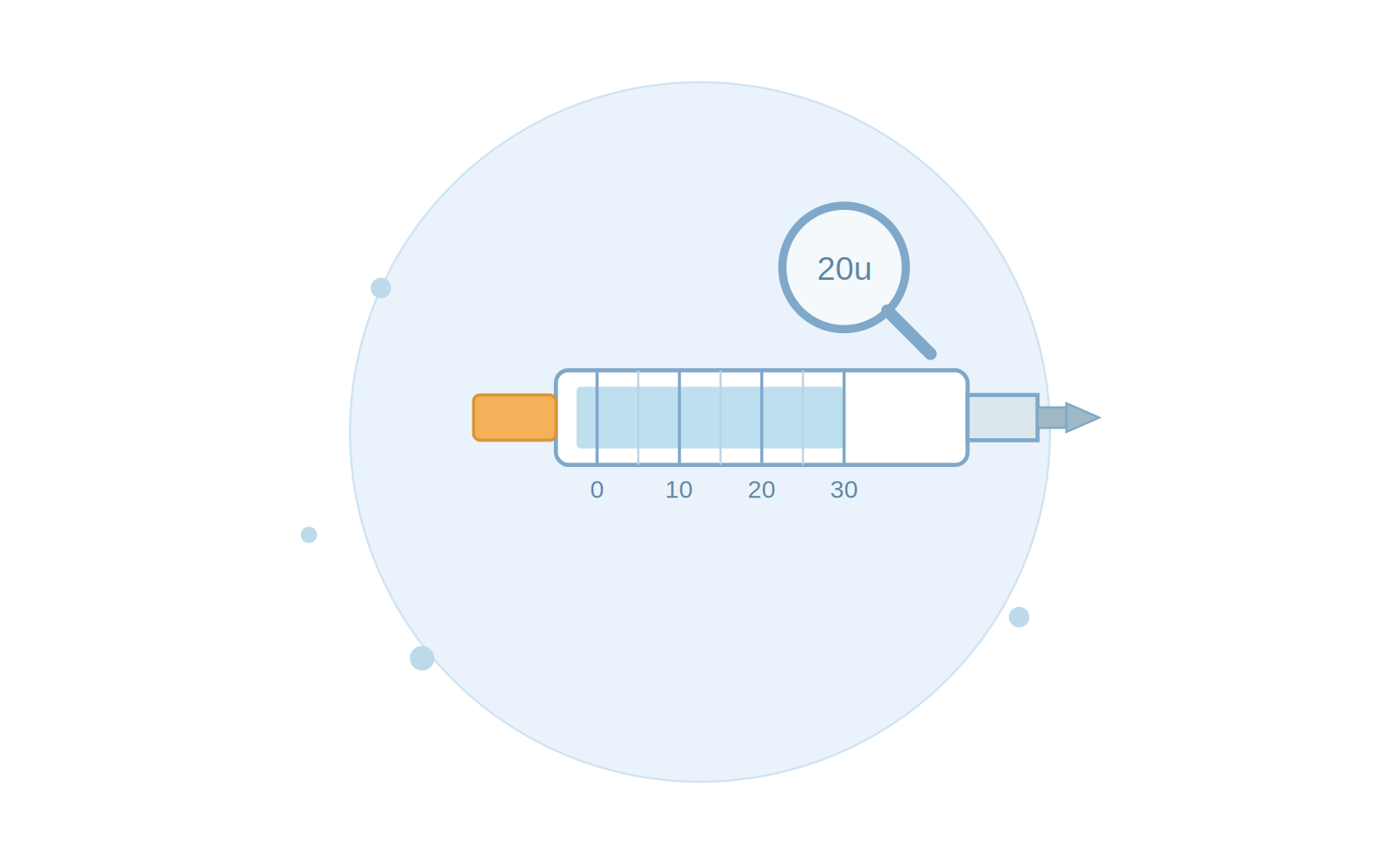
Confused about what "20 units" actually means on a syringe? This guide breaks down the exact formula for converting peptide doses into syringe units, a quick-reference conversion chart, and the most common mistakes that lead to inaccurate draws.
Open Blog
September 7, 2026
·8 min read
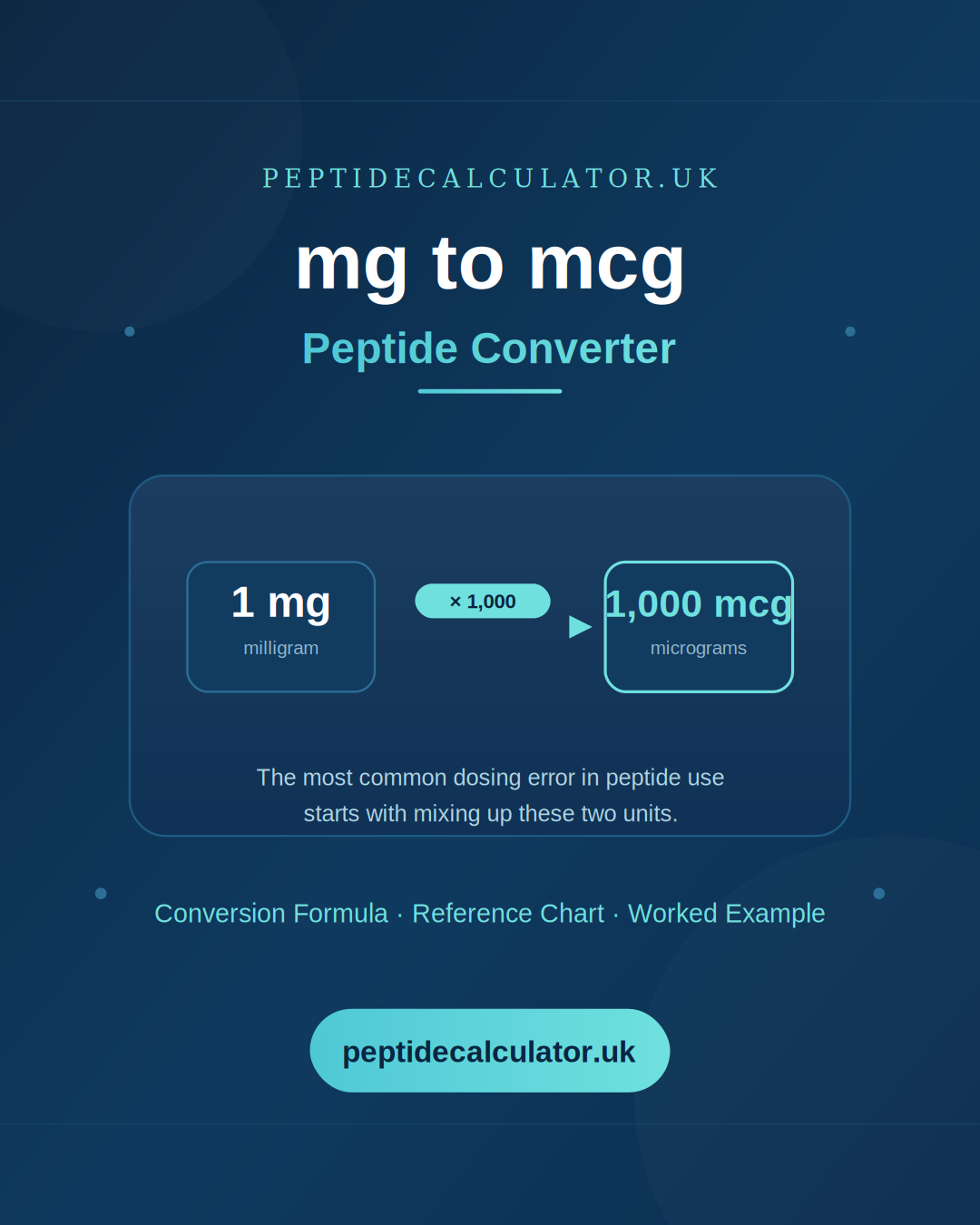
A misplaced decimal between milligrams and micrograms is the most common — and most serious — mistake in peptide dosing. This guide breaks down the mg-to-mcg conversion clearly, with a quick reference chart, a worked formula, and how to protect yourself from a 1,000x dosing error.
Open Blog
September 7, 2026
·6 min read
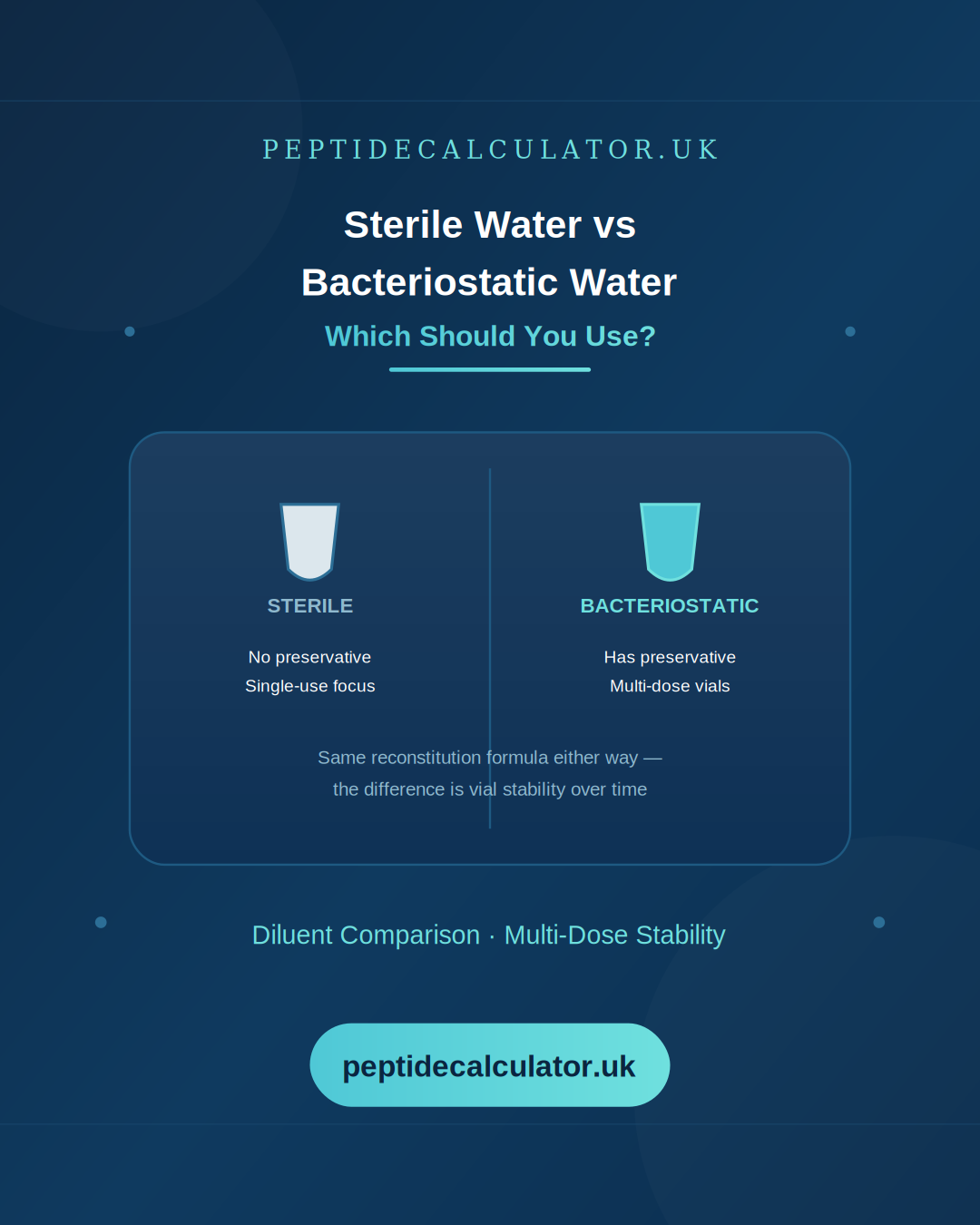
Choosing the right diluent is an important part of peptide reconstitution, and understanding the difference between sterile water and bacteriostatic water can help you follow proper storage and handling practices. Although both are used to reconstitute lyophilized peptides, they are not interchangeable in every situation. This educational guide explains the key differences between sterile water and bacteriostatic water, including their preservatives, common use cases, and why bacteriostatic water is typically preferred for multi-dose vials. It also covers how the choice of diluent affects storage and stability while explaining why the underlying reconstitution calculations remain the same regardless of which diluent is used. You'll also learn about common mistakes, frequently asked questions, and best practices for selecting the appropriate diluent based on manufacturer instructions. For accurate reconstitution calculations, dosage conversions, and syringe unit estimates, you can use the free tools available at PeptideCalculator.uk. This article is provided for educational purposes only and should not be considered medical advice. Always follow your product manufacturer's instructions and consult a qualified healthcare professional when appropriate.
Open Blog
September 7, 2026
·6 min read
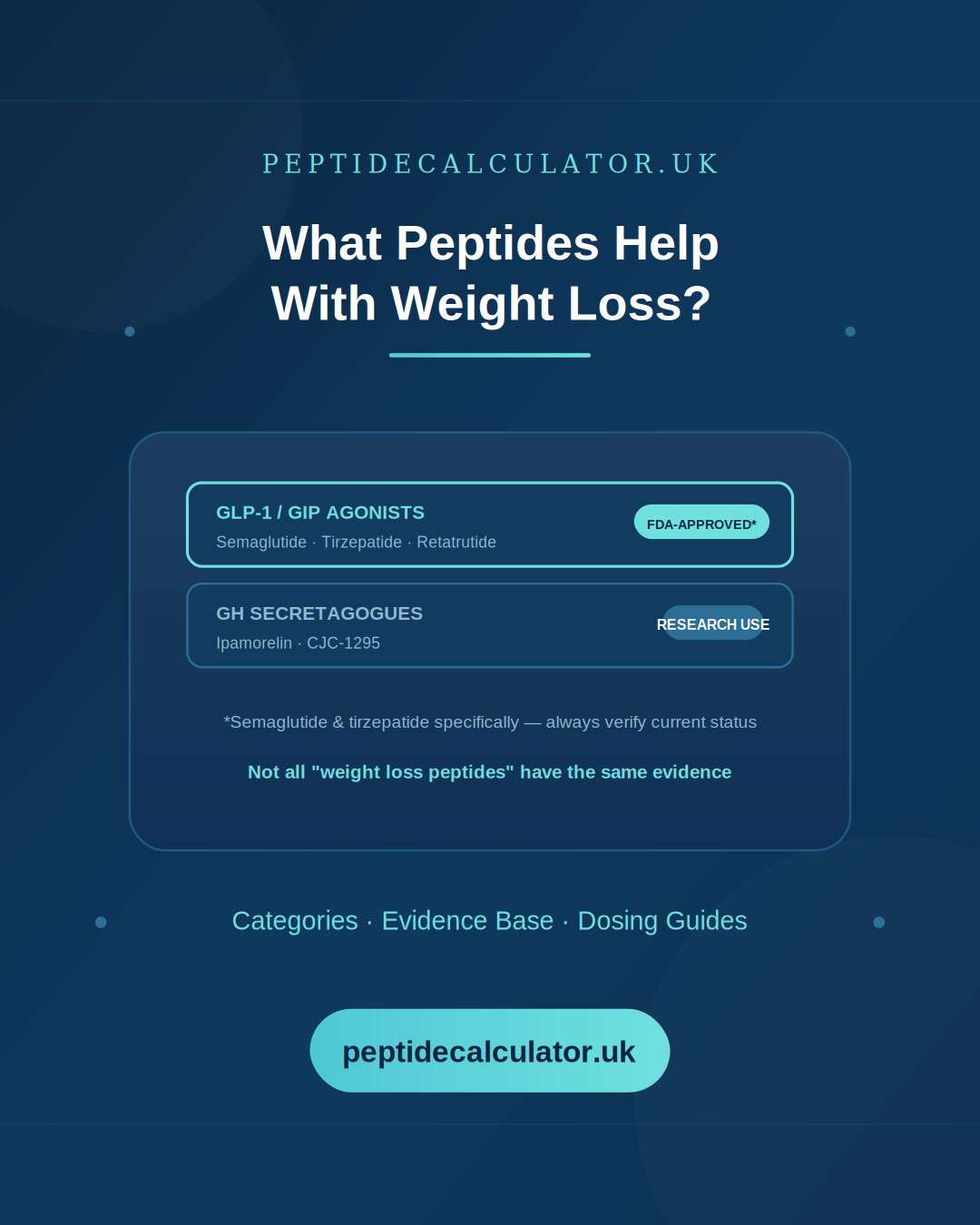
"Peptides for weight loss" covers everything from FDA-approved GLP-1 medications to research-only compounds. This guide breaks down which category each one falls into and why that distinction matters.
Open Blog
September 7, 2026
·2 min read
HGH Fragment 176-191 is a modified peptide requiring precise reconstitution math. This guide covers the calculator formula, a full worked example, and common dosing mistakes.
Open Blog
September 7, 2026
·5 min read
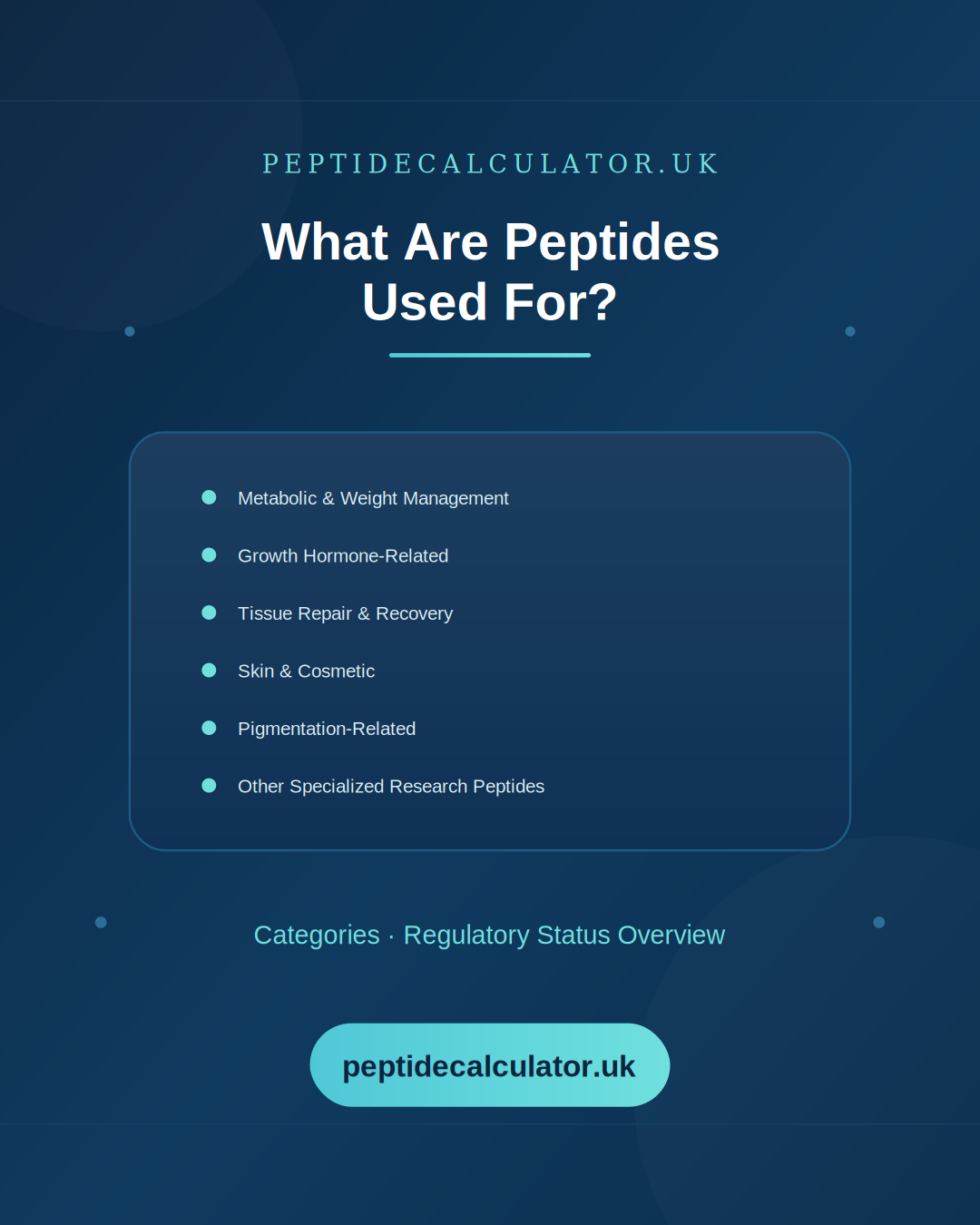
Peptides are a diverse group of amino acid chains with a wide range of biological functions, making them far more than a single category of compounds. From FDA-approved medications for blood sugar and weight management to research-only peptides used in laboratory settings, each peptide has its own mechanism of action, evidence base, and regulatory status. This beginner-friendly guide explores the major categories of peptide use, including metabolic and weight management peptides, growth hormone-related peptides, tissue repair research compounds, cosmetic peptides like GHK-Cu, pigmentation-related peptides, and other specialized compounds. It also explains why peptide regulations vary, addresses common misconceptions, and answers frequently asked questions for those starting their peptide education. Whether you're learning the basics or researching a specific compound, this guide provides a clear introduction to understanding peptide classifications. Visit PeptideCalculator.uk for free peptide calculators, dosage calculators, reconstitution tools, and comprehensive educational guides. This content is intended for educational purposes only and does not constitute medical advice. Always consult a qualified healthcare professional before using any peptide.
Open Blog
September 7, 2026
·8 min read
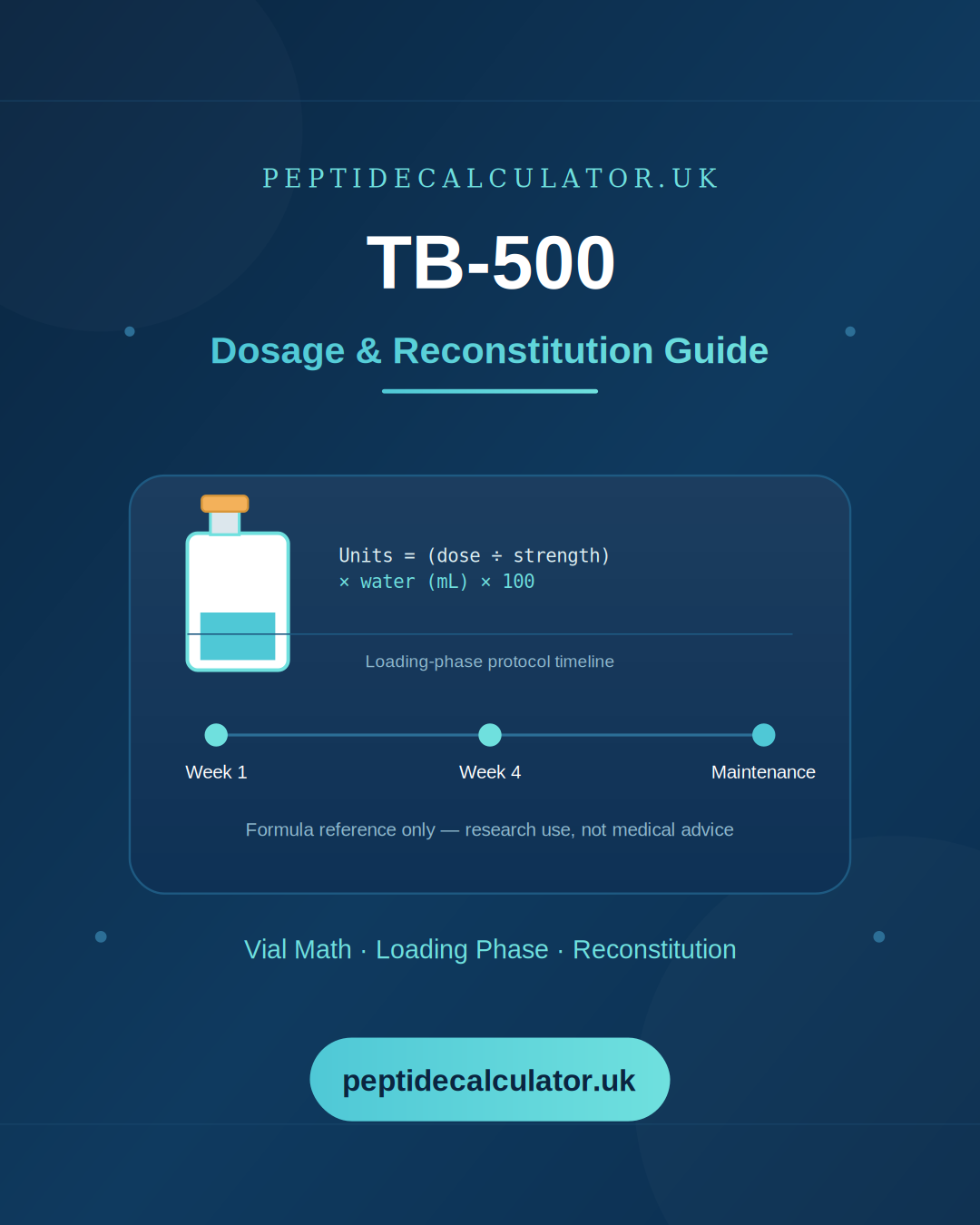
TB-500 is commonly used in a loading-phase protocol, which makes accurate reconstitution math especially important. This guide covers the formula, a worked example, and common dosing mistakes.
Open Blog
September 7, 2026
·6 min read
Anti-aging is the broadest, least well-defined peptide category, blending topical skincare compounds with injectable longevity-framed peptides. This guide separates what's actually being discussed under this umbrella term.
Open Blog