Peptide Blog Article
What Are Peptides Used For? | Beginner's Guide to Peptide Types & Uses
Peptides are a diverse group of amino acid chains with a wide range of biological functions, making them far more than a single category of compounds. From FDA-approved medications for blood sugar and weight management to research-only peptides used in laboratory settings, each peptide has its own mechanism of action, evidence base, and regulatory status. This beginner-friendly guide explores the major categories of peptide use, including metabolic and weight management peptides, growth hormone-related peptides, tissue repair research compounds, cosmetic peptides like GHK-Cu, pigmentation-related peptides, and other specialized compounds. It also explains why peptide regulations vary, addresses common misconceptions, and answers frequently asked questions for those starting their peptide education. Whether you're learning the basics or researching a specific compound, this guide provides a clear introduction to understanding peptide classifications. Visit PeptideCalculator.uk for free peptide calculators, dosage calculators, reconstitution tools, and comprehensive educational guides. This content is intended for educational purposes only and does not constitute medical advice. Always consult a qualified healthcare professional before using any peptide.
What Are Peptides Used For?
"Peptides" is a broad category covering everything from FDA-approved prescription medications to research-only laboratory compounds, and the specific use of any given peptide depends entirely on which one you're talking about. This guide gives a beginner-level overview of the major categories peptides fall into and what each is generally associated with.
This article is for general education only. It is not medical advice. Consult a licensed healthcare provider before using any peptide.
What Makes Something a "Peptide"
A peptide is simply a short chain of amino acids — shorter than a full protein, but built from the same components. This structural definition covers an enormous range of compounds with completely different functions, which is why "what are peptides used for" doesn't have a single answer. The use depends entirely on the specific peptide's sequence and which biological receptors or pathways it interacts with.
Major Categories of Peptide Use
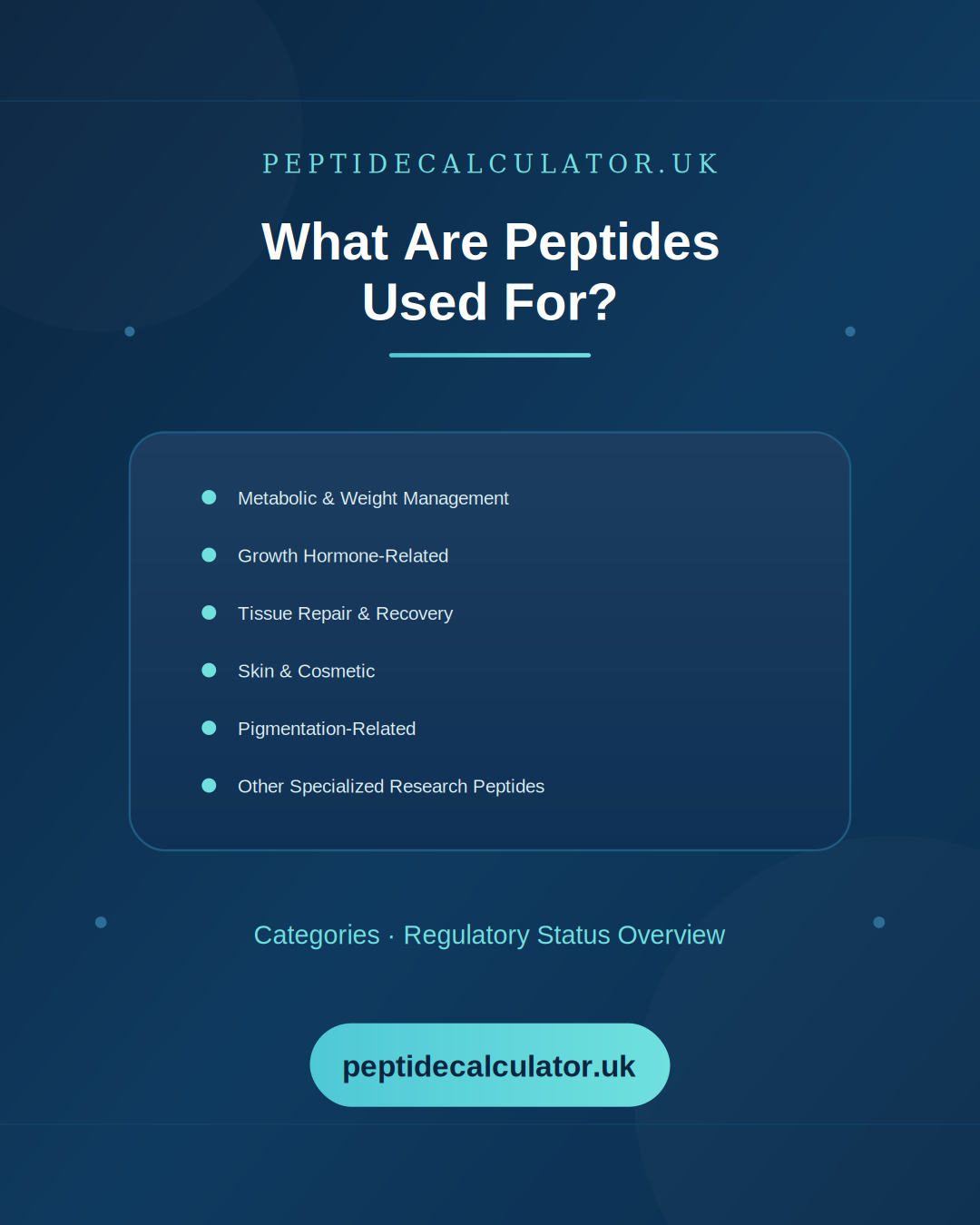
Metabolic and Weight Management
Some peptides, most notably GLP-1 receptor agonists like semaglutide and tirzepatide, are FDA-approved prescription medications used for blood sugar management and weight management under medical supervision. These represent some of the most clinically studied and regulated peptides in current use. See our semaglutide and tirzepatide guides for dosing calculation specifics.
Growth Hormone-Related Peptides
Compounds like sermorelin, ipamorelin, and CJC-1295 are commonly discussed in the context of growth hormone-releasing pathways. These are generally research-oriented compounds without the same FDA-approval pathway as GLP-1 medications, and their regulatory status varies by region.
Tissue Repair and Recovery-Oriented Peptides
BPC-157 and TB-500 are frequently discussed in research contexts related to tissue repair and recovery processes. These remain research-use compounds without FDA approval for human therapeutic use in most jurisdictions.
Skin and Cosmetic-Oriented Peptides
GHK-Cu is unique in having both topical (skincare) and injectable research applications, with the topical form appearing in commercial cosmetic products at various concentrations. See our GHK-Cu guide for how the dosing math differs between these two formats.
Pigmentation-Related Peptides
Melanotan 2 is discussed in the context of skin pigmentation processes, and remains a research-use compound without FDA approval for general human use.
Other Specialized Peptides
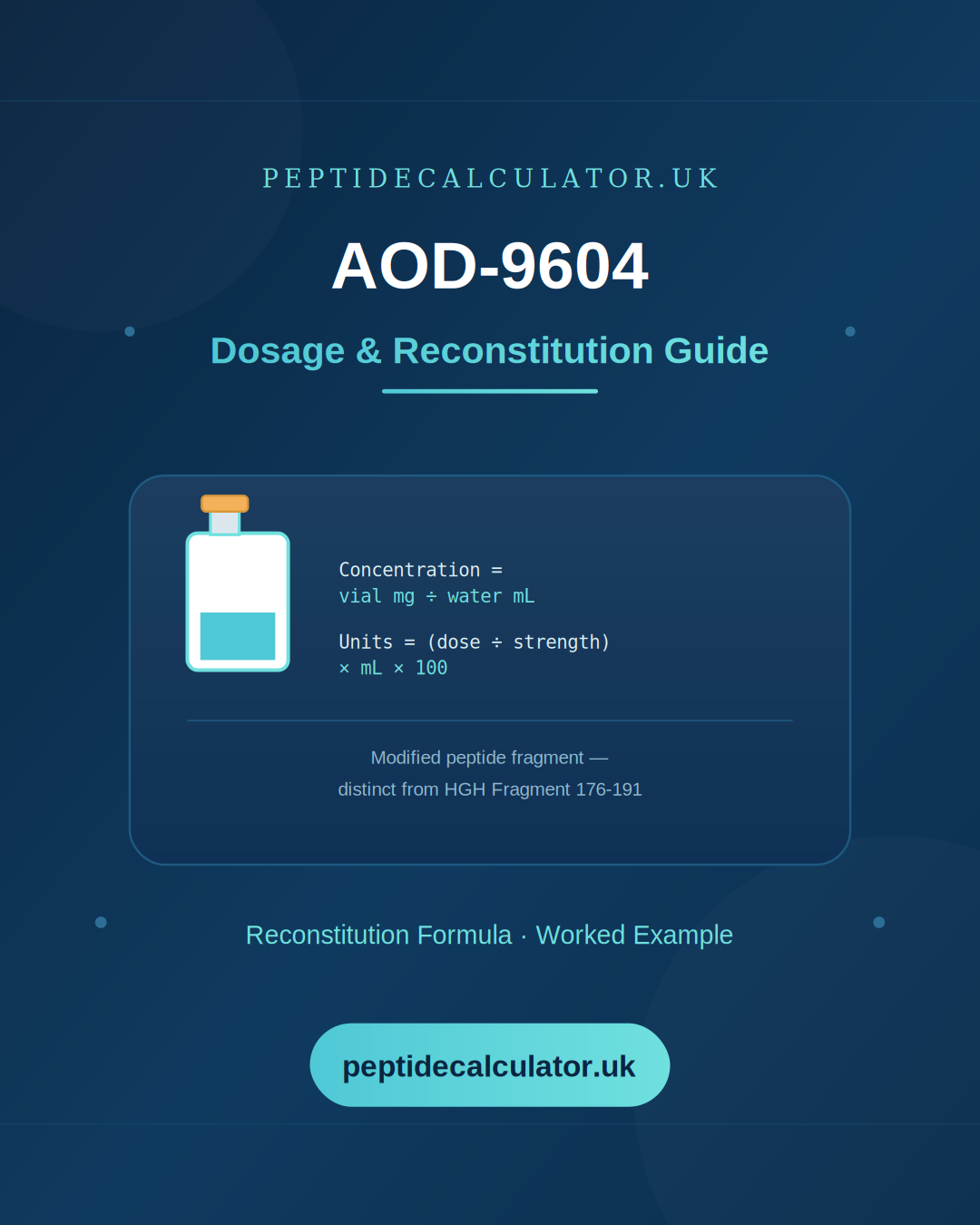
Compounds like PT-141, AOD-9604, and HGH Fragment 176-191 each have their own specific area of research focus and are generally categorized as research-use compounds, with regulatory status varying by country.
Why Regulatory Status Varies So Much
The peptide category spans from fully FDA-approved prescription medications (semaglutide, tirzepatide) to compounds sold explicitly labeled "for research purposes only" with no approved human-use pathway. This isn't a minor technicality — it reflects genuinely different levels of clinical study, regulatory oversight, and evidence base between individual peptides. Treating "peptides" as a single category with uniform safety or legal status overlooks this significant variation.
How to Approach Learning About a Specific Peptide
Rather than researching "peptides" as a single broad topic, it's more useful to research the specific compound you're interested in directly — its particular mechanism, its regulatory status in your location, and its specific reconstitution and dosing considerations. Our compound-specific guides each cover one peptide's formula and practical details individually, since generalizing across the entire category misses meaningful differences between compounds.
Common Misconceptions
- Assuming all peptides have the same regulatory status. Some are prescription medications; others are research-only compounds with no approved human-use pathway.
- Assuming all peptides work through similar mechanisms. Each peptide's specific amino acid sequence determines its unique function — there's no universal "how peptides work" answer.
- Assuming "natural" or "peptide-based" implies a specific safety profile. Safety and evidence base are compound-specific questions, not category-wide assumptions.
Frequently Asked Questions
Are all peptides legal? This varies significantly by specific compound and country. Some peptides are approved prescription medications; others have no approved human-use pathway and are sold for research purposes only. Always verify a specific compound's status through official regulatory sources for your location.
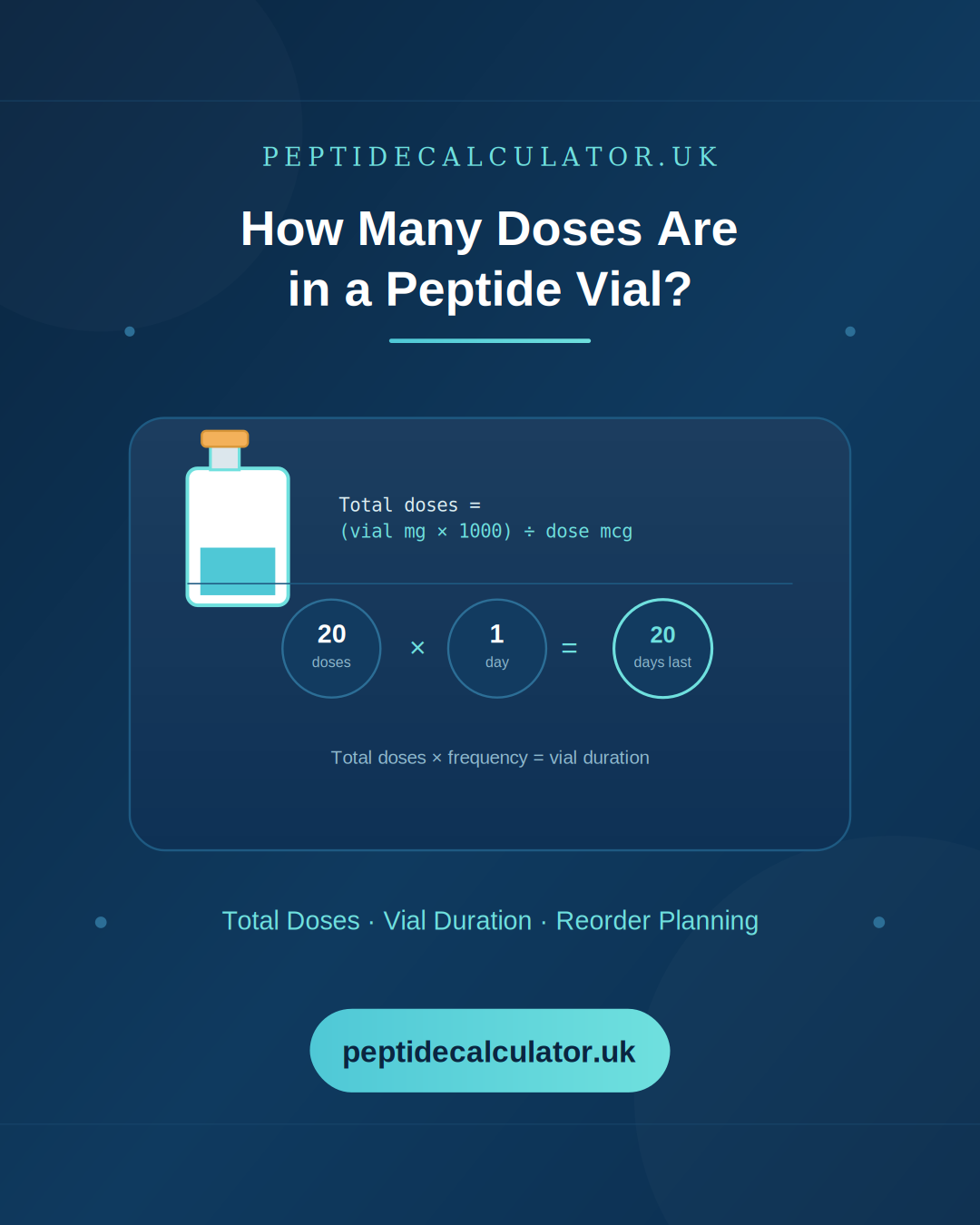
Do all peptides require reconstitution? Many injectable peptides do, since they're commonly supplied as lyophilized powder. Some, like certain topical formulations of GHK-Cu, don't involve reconstitution at all. Always check your specific product's format and instructions.
Is there a peptide for every use case? The category is broad, but that doesn't mean every specific application has a well-studied, approved peptide behind it. Evidence quality and regulatory approval vary enormously between individual compounds within the category.
Where should I start if I'm new to peptides generally? Our beginner's guide covers the foundational concepts — units, reconstitution, and calculator use — that apply across most injectable peptides, before diving into any specific compound's details.
Final Thoughts
"What are peptides used for" doesn't have a single answer, because the category spans FDA-approved metabolic medications, research-use recovery compounds, growth hormone-related peptides, and more — each with its own mechanism, evidence base, and regulatory status. Understanding which specific peptide you're interested in, rather than treating the category as uniform, is the more useful starting point for further research.
This article is for general education only. It is not medical advice. Consult a licensed healthcare provider before using any peptide.