01
Dose calculation
Instantly calculates the syringe units needed for the selected peptide dose.
Peptide dose: Select dose
Draw syringe to: Select values

Your vial contains: Select values
Concentration: Select values
Calculator Features
This peptide dosage calculator combines peptide reconstitution math, syringe unit conversion, concentration estimates, and vial dose calculations in one simple tool.
Instantly calculates the syringe units needed for the selected peptide dose.
Shows the calculated syringe draw level using a visual syringe fill indicator.
Allows both preset peptide values and manual custom entries for dose, strength, and water.
Recent Articles
September 19, 2026
·9 min read
Getting peptide dosage wrong is one of the most common (and costly) mistakes in reconstitution. This guide breaks down exactly how a peptide calculator works, the formulas behind it, and a step-by-step walkthrough of reconstituting peptides correctly — so every dose you draw is accurate.
Read Article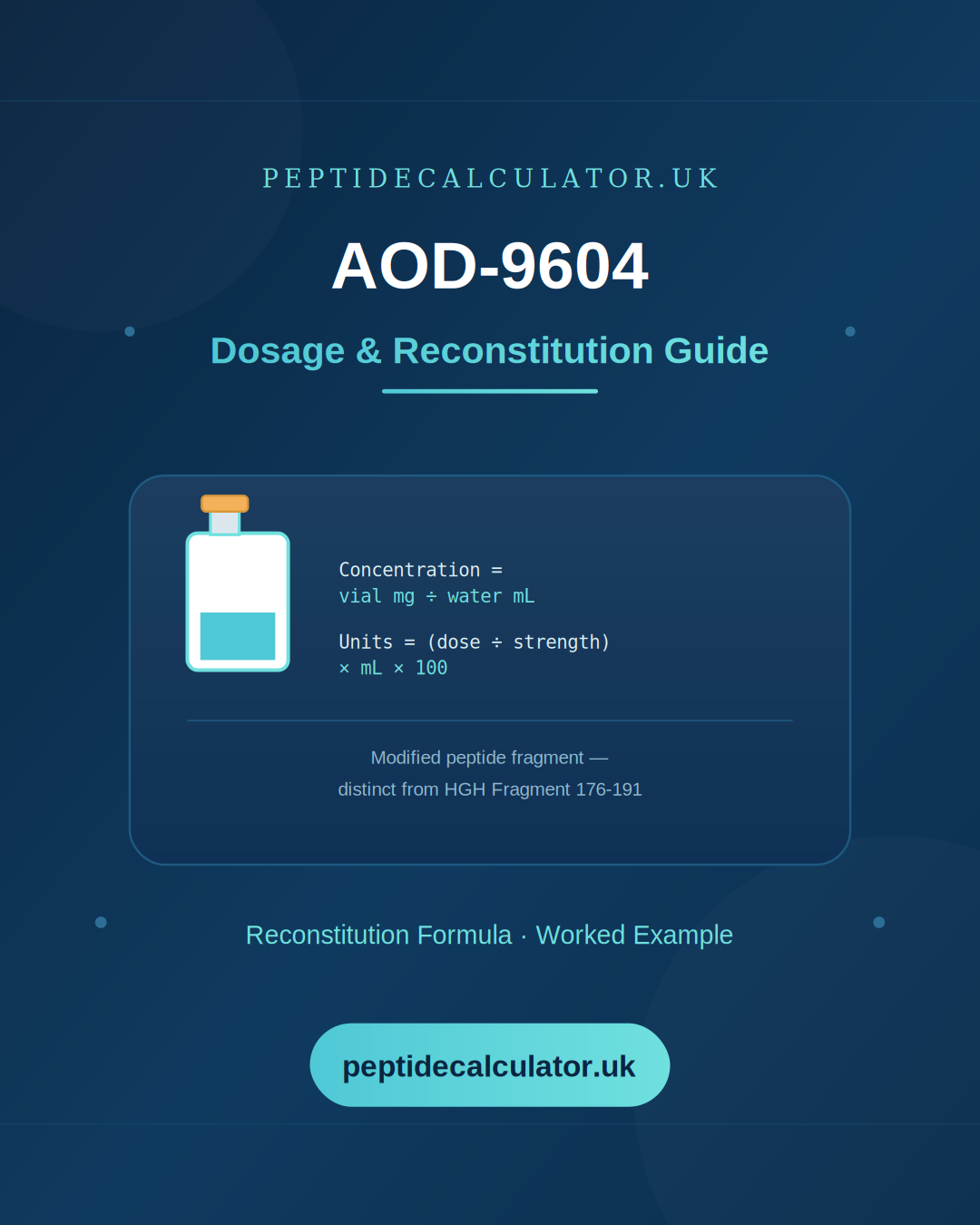
September 10, 2026
·6 min read
AOD-9604 dosing requires accurate microgram-level calculation, and it's often confused with its close relative, HGH Fragment 176-191. This guide covers the formula, a worked example, and how to keep the two compounds' math separate.
Read Article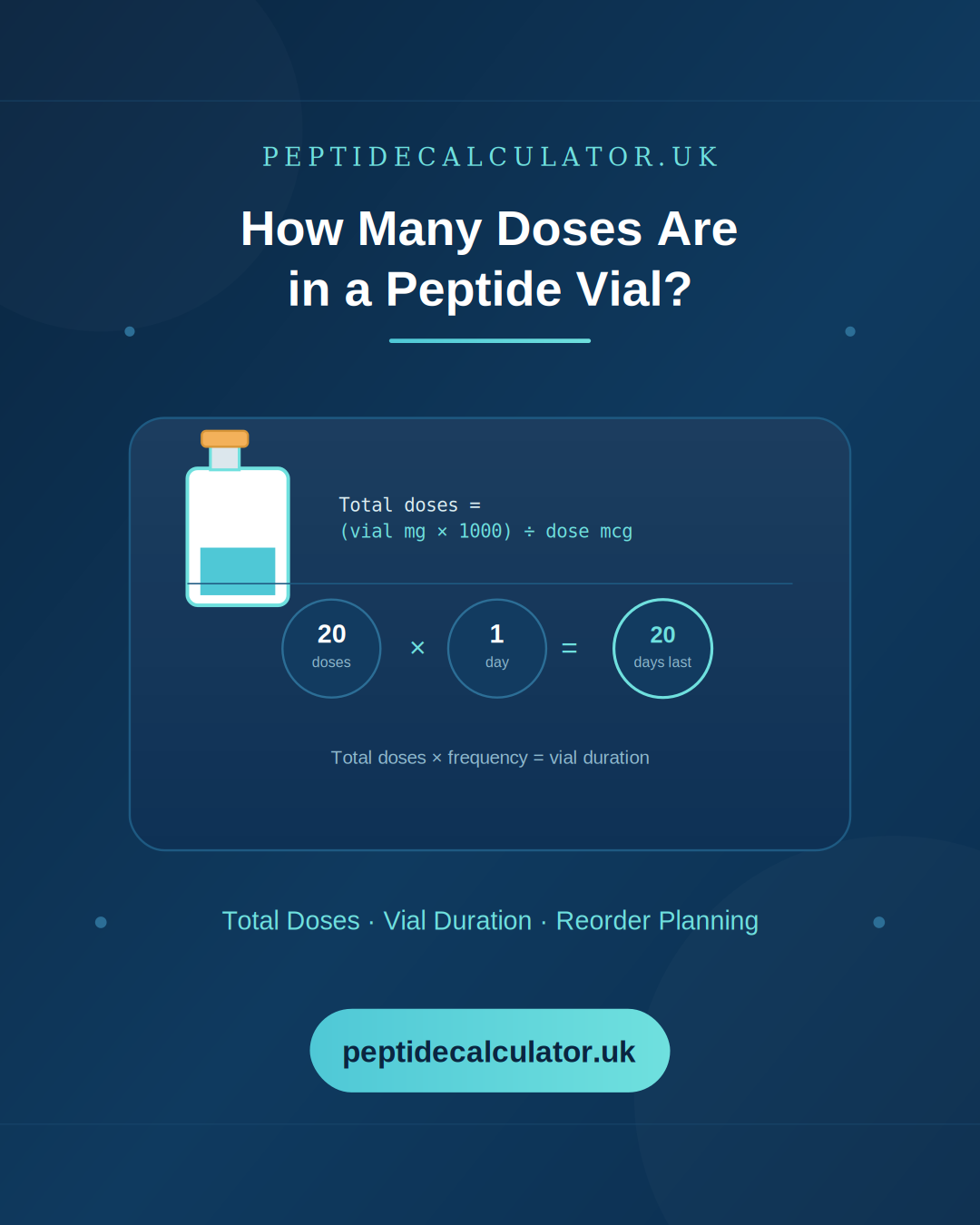
September 10, 2026
·7 min read
Knowing how many doses a vial provides — and how long it will actually last — helps you budget, plan reorders, and avoid running out mid-protocol. This guide covers the exact formula plus a quick reference chart.
Read ArticleFAQ
Find answers to common questions about peptides, peptide reconstitution, mixing ratios, concentration, and syringe-based dose calculations.
Peptides are commonly discussed for goals such as skin support, muscle development, weight management, recovery, hair care, bone support, and hormone-related wellness.
Peptides often act like signaling messengers that can influence functions linked to healing, tissue repair, metabolism, and muscle-related processes.
To work out a peptide dose, you need the vial strength, the amount of water added, and the dose you want to draw. The calculator uses these values to estimate syringe units and concentration.
The water amount depends on the concentration you want to create. Many users work with bacteriostatic water, and the final mL can vary based on the peptide and dosing plan.