Peptide Blog Article
Tirzepatide Calculator: How to Dose It Correctly
Tirzepatide follows the same reconstitution logic as other injectable peptide-class medications, but getting the vial math right matters just as much as following your prescribed dose. This guide covers the formula, an illustrative worked example, and why your actual dose should always come from your prescriber.
Tirzepatide Calculator: How to Dose It Correctly
Tirzepatide follows the same reconstitution and dosing logic as other injectable peptide-class medications, but because it's frequently supplied in multi-dose vial format for compounded preparations, getting the syringe math right matters just as much as following your prescribed dose itself. This guide walks through how the calculation works.
This article is for general education only and does not provide medical dosing recommendations. Tirzepatide is a prescription medication. Always follow the exact dose, schedule, and instructions provided by your prescribing healthcare provider — never determine your own dose from this or any online calculator.
Vials vs. Pens: Why the Math Differs
Like semaglutide, tirzepatide is available as:
- Pre-filled pens — pre-measured, no reconstitution or syringe-draw math required
- Multi-dose vials — common with compounded formulations, requiring the same reconstitution and unit-conversion process used across peptide dosing generally
If you're working from a vial, you'll need three numbers: the vial's total labeled strength (mg), the diluent volume specified in the product's reconstitution instructions, and your prescribed dose. This same three-variable structure is used across other GLP-1 medications too — see our semaglutide dosage calculator guide for a side-by-side comparison.
The Formula
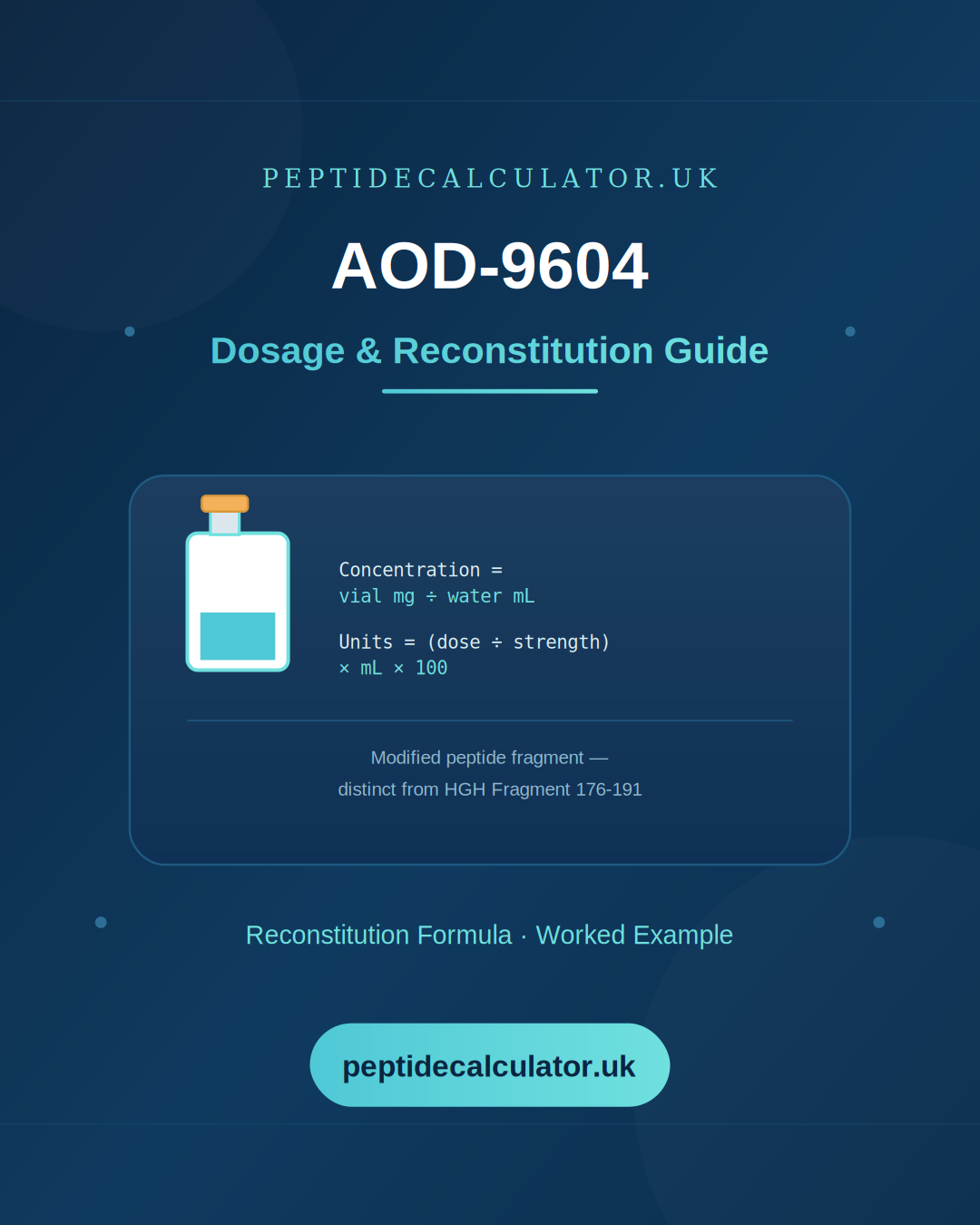
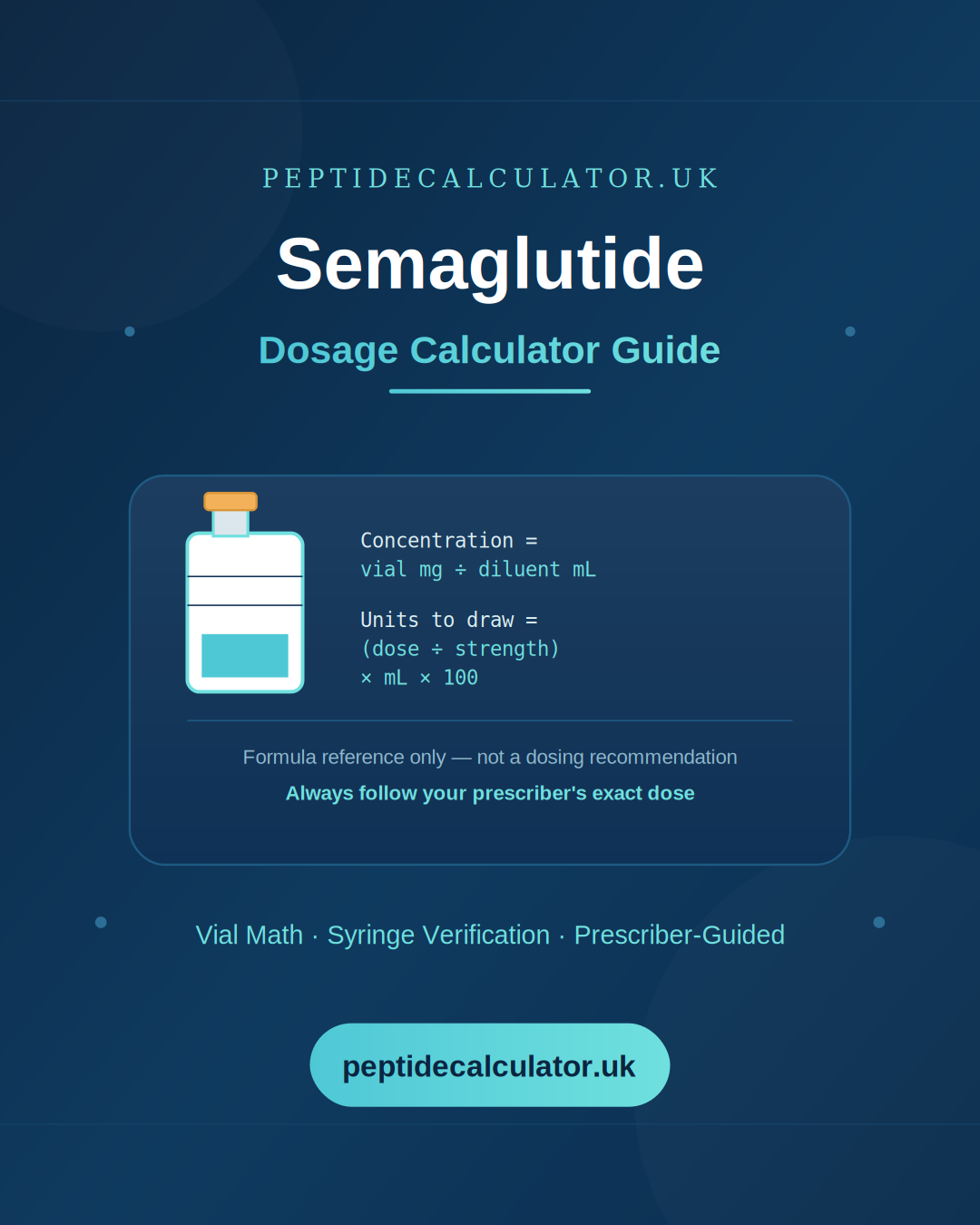
Concentration (mg/mL) = Total tirzepatide in vial (mg) ÷ Diluent added (mL)
Units to draw = (Prescribed dose in mg ÷ Vial strength in mg) × Diluent (mL) × 100
Illustrative Example (formula demonstration only — not a dosing recommendation)
Suppose a vial is labeled as containing 10mg of tirzepatide, reconstituted with 2mL of diluent per the product's specific instructions, and a prescriber has directed a 2.5mg dose:
Units to draw = (2.5 ÷ 10) × 2 × 100 = 50 unitsThis is a formula demonstration only. Always use your product's actual labeled strength, its specific reconstitution instructions, and the exact dose your prescriber has given you — not figures from an example.
A tirzepatide calculator runs this same formula automatically, letting you verify your syringe draw against your specific vial and prescription.
What You Need Before Calculating
- Exact vial strength — tirzepatide vials vary in labeled mg content between suppliers and formulations
- Product-specific diluent volume — follow the reconstitution instructions that came with your specific vial, not a generalized volume
- Your prescribed dose — sourced only from your prescriber, never from general dosing ranges found online
Common Mistakes With Tirzepatide Vial Dosing
- Assuming all vials use the same diluent volume. Compounded formulations differ by pharmacy and product — always check the specific instructions for your vial.
- Confusing "vial strength" with "single dose." A vial's total mg content represents multiple doses at your prescribed amount, not a single injection.
- Skipping recalculation after a titration change. Tirzepatide dosing is typically increased incrementally under medical supervision — your syringe draw needs to be recalculated every time your prescribed dose changes.
- Relying on dosing figures shared informally. Individual titration schedules vary significantly based on tolerance and clinical response — a number that worked for someone else isn't a safe reference point for your own dose.
Why We Don't List "Typical" Dose Ranges Here
Tirzepatide is a regulated prescription medication with an individualized titration schedule determined by your prescribing clinician based on your response and medical history. This article intentionally focuses on the calculation method, not dosing recommendations, because the appropriate dose is a clinical decision — not something a general calculator or article should attempt to guide.
What a peptide calculator is useful for here is double-checking the arithmetic behind a dose your prescriber has already specified, so you can confirm your syringe draw is accurate before injecting.
Frequently Asked Questions
Does the same formula apply across different tirzepatide vial strengths? Yes — the calculation structure is identical regardless of whether your vial is labeled 5mg, 10mg, 15mg, or another strength. Just make sure you're entering the exact labeled strength of your specific vial.
Can I switch between a pen and a vial mid-treatment? This is a decision to make with your prescriber, since pens are pre-dosed while vials require you to independently verify your syringe draw each time. Never assume the two formats are interchangeable without that guidance.
Why might my calculated units seem different from a previous fill? This usually comes down to a different vial strength, a different diluent volume, or a change in your prescribed dose following a titration step. Recheck all three inputs whenever your numbers look different than expected.
Is it normal for tirzepatide dosing to increase over time? Titration schedules — gradually increasing a dose under medical supervision — are common with GLP-1 medications, but the specific schedule and pace should always come from your prescriber, not a generalized protocol.
Final Thoughts
Tirzepatide vial dosing uses the same reconstitution formula as other peptide-class calculations, but the source of your actual dose should always be your prescribing clinician. Use an online peptide calculator to verify the syringe math for a dose you've already been prescribed, and always defer to your product's specific reconstitution instructions over any general example shown here. For a closer look at reading your syringe accurately once you've calculated your units, see our units-to-syringe conversion guide.
This article is for general education only and does not provide medical dosing recommendations. Always follow your prescribing healthcare provider's exact instructions.