Peptide Blog Article
Peptide Calculator: The Complete Guide to Peptide Dosage & Reconstitution
Getting peptide dosage wrong is one of the most common (and costly) mistakes in reconstitution. This guide breaks down exactly how a peptide calculator works, the formulas behind it, and a step-by-step walkthrough of reconstituting peptides correctly — so every dose you draw is accurate.
Peptide Calculator: The Complete Guide to Peptide Dosage & Reconstitution
If you're working with peptides, getting the math right isn't optional. A single mistake in reconstitution or dosing can throw off your entire protocol, waste an expensive vial, or lead to inaccurate results. That's exactly why a peptide calculator has become an essential tool for researchers, biohackers, and anyone handling lyophilized peptides.
This guide walks you through everything you need to know: what a peptide calculator does, how to use one, and how to calculate your dosage and reconstitution by hand if you ever need to double-check the numbers.
What Is a Peptide Calculator?
A peptide calculator is a tool that helps you figure out three things:
- How much bacteriostatic water (or other diluent) to add to a lyophilized peptide vial
- The concentration of your resulting solution (mg/mL)
- How many units or milliliters to draw up in a syringe to hit your target dose
Instead of manually converting between milligrams, micrograms, milliliters, and syringe units every time you prep a dose, a peptide dosage calculator does the conversion instantly. You enter three numbers — the amount of peptide in the vial, the volume of water you're adding, and your target dose — and the calculator tells you exactly where to pull the syringe plunger.
Why You Need a Peptide Reconstitution Calculator
Reconstitution is the process of turning a freeze-dried (lyophilized) peptide powder into an injectable or usable liquid solution. It sounds simple, but the math compounds quickly:
- Vials are usually labeled in milligrams (mg), but doses are typically measured in micrograms (mcg)
- Syringes are marked in units, not milliliters, and 1 mL equals 100 units on a standard insulin syringe
- The amount of water you add directly changes the concentration — and therefore how many units you need to draw for the same dose
A peptide reconstitution calculator removes the guesswork by handling all of these conversions in one step. This matters because even a small error in your bac water amount can mean the difference between an accurate dose and one that's off by 20% or more.
How to Reconstitute Peptides: Step-by-Step
Before you touch a calculator, it helps to understand the physical process. Here's the standard method:
- Bring everything to room temperature. Cold peptide powder or cold bacteriostatic water can interfere with proper dissolution.
- Sanitize your workspace. Wash your hands, use sterile gloves, and wipe vial tops with an alcohol swab.
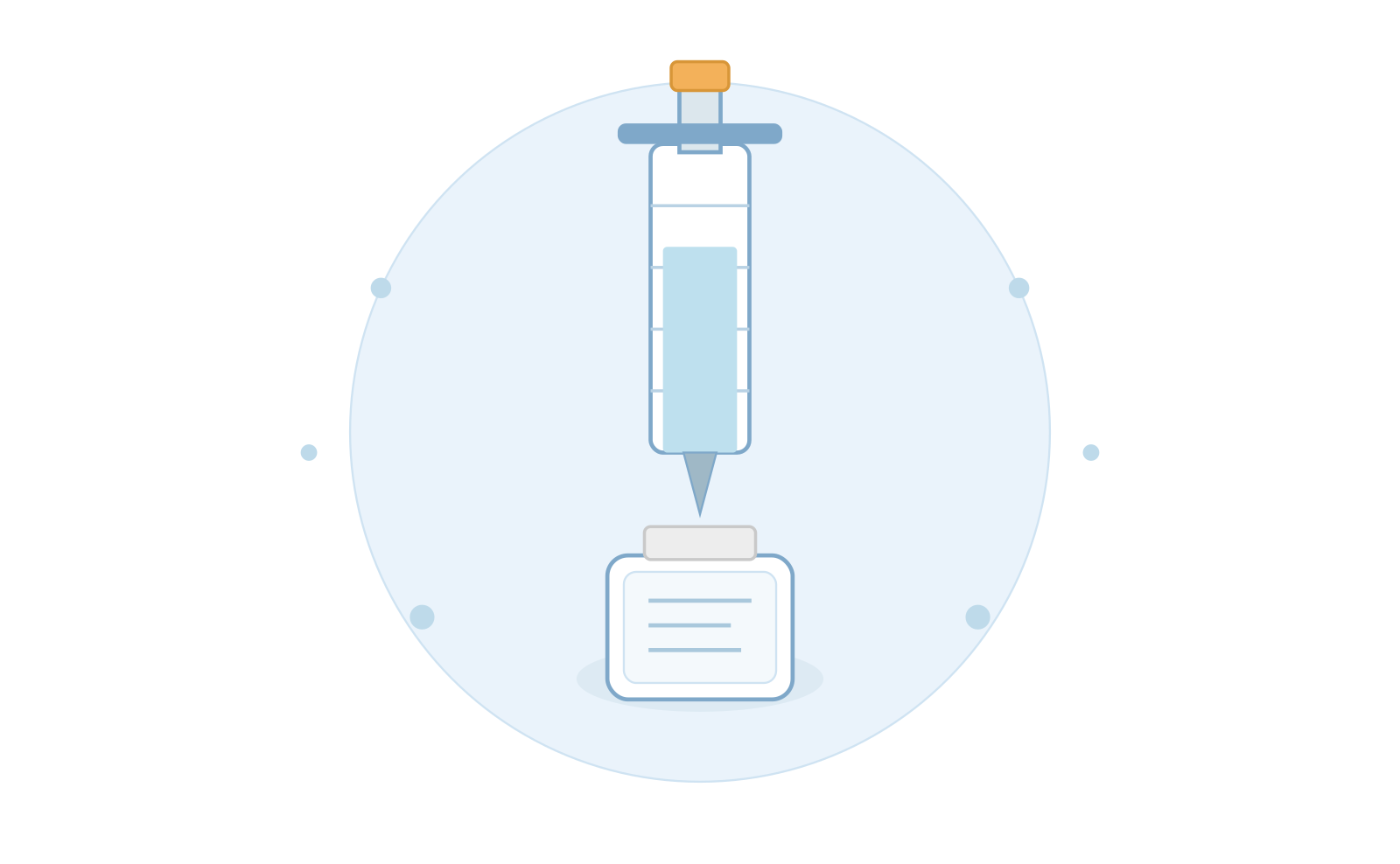
- Draw up your bacteriostatic water. Use a sterile syringe to pull the amount of water you've decided on (commonly 1–3 mL, depending on your target concentration).
- Inject the water slowly. Insert the needle at an angle and let the water run down the inside wall of the vial rather than shooting it directly onto the powder. This reduces foaming and protects the peptide's structure.
- Swirl, don't shake. Gently roll the vial between your palms until the powder is fully dissolved. Shaking can degrade the peptide.
- Refrigerate. Store the reconstituted vial cold and protected from light unless otherwise specified.
Once reconstituted, your peptide is ready to be measured and drawn using a peptide calculator for each dose.
The Peptide Dosage Formula (How the Calculator Works Behind the Scenes)
If you want to understand — or double check — what an online peptide calculator is doing, here are the three formulas involved:
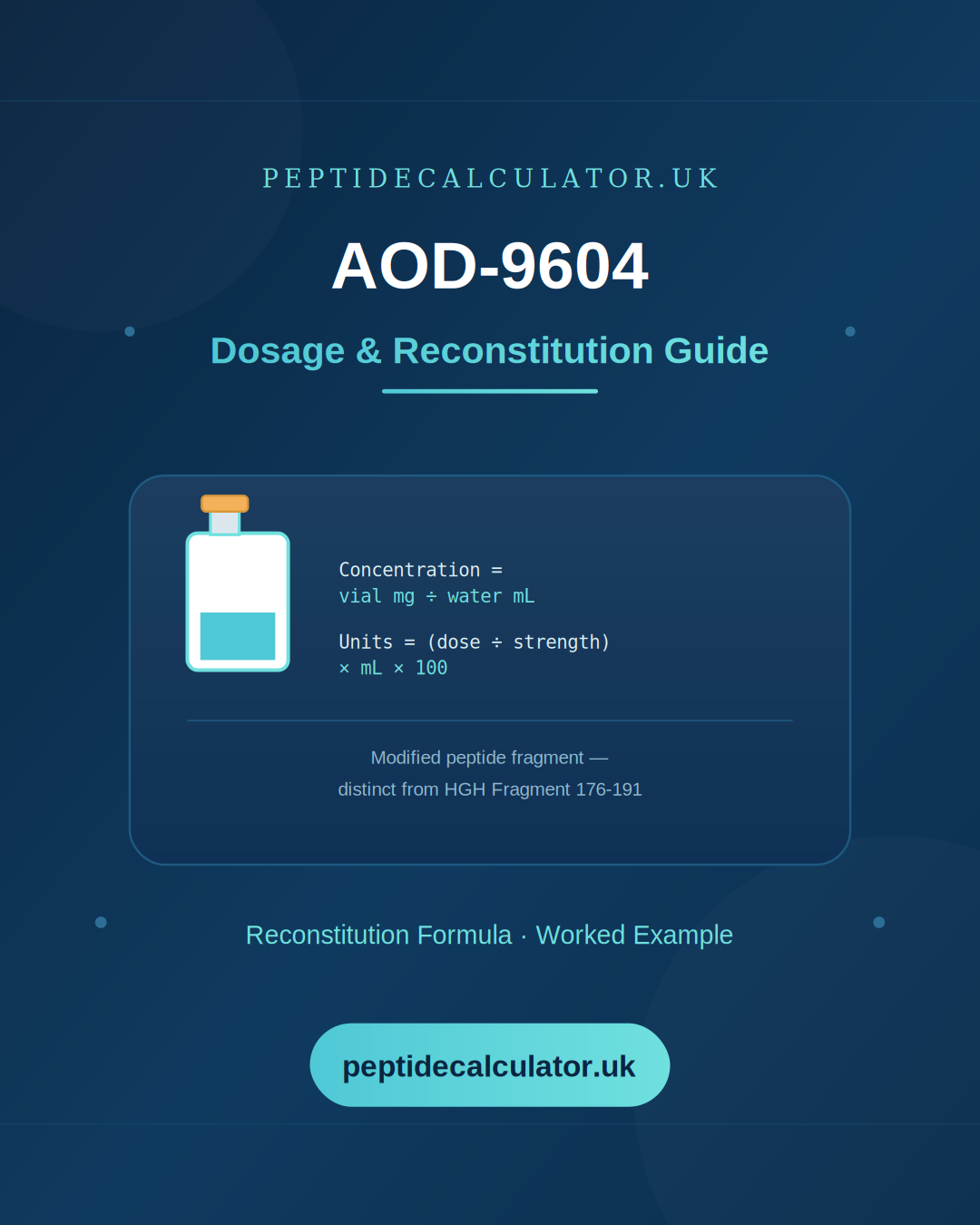
1. Concentration (mg/mL):
Concentration = Total peptide in vial (mg) ÷ Water added (mL)2. Units to draw on syringe:
Units = (Target dose in mcg ÷ (Vial mg × 1000)) × Water (mL) × 1003. Total doses per vial:
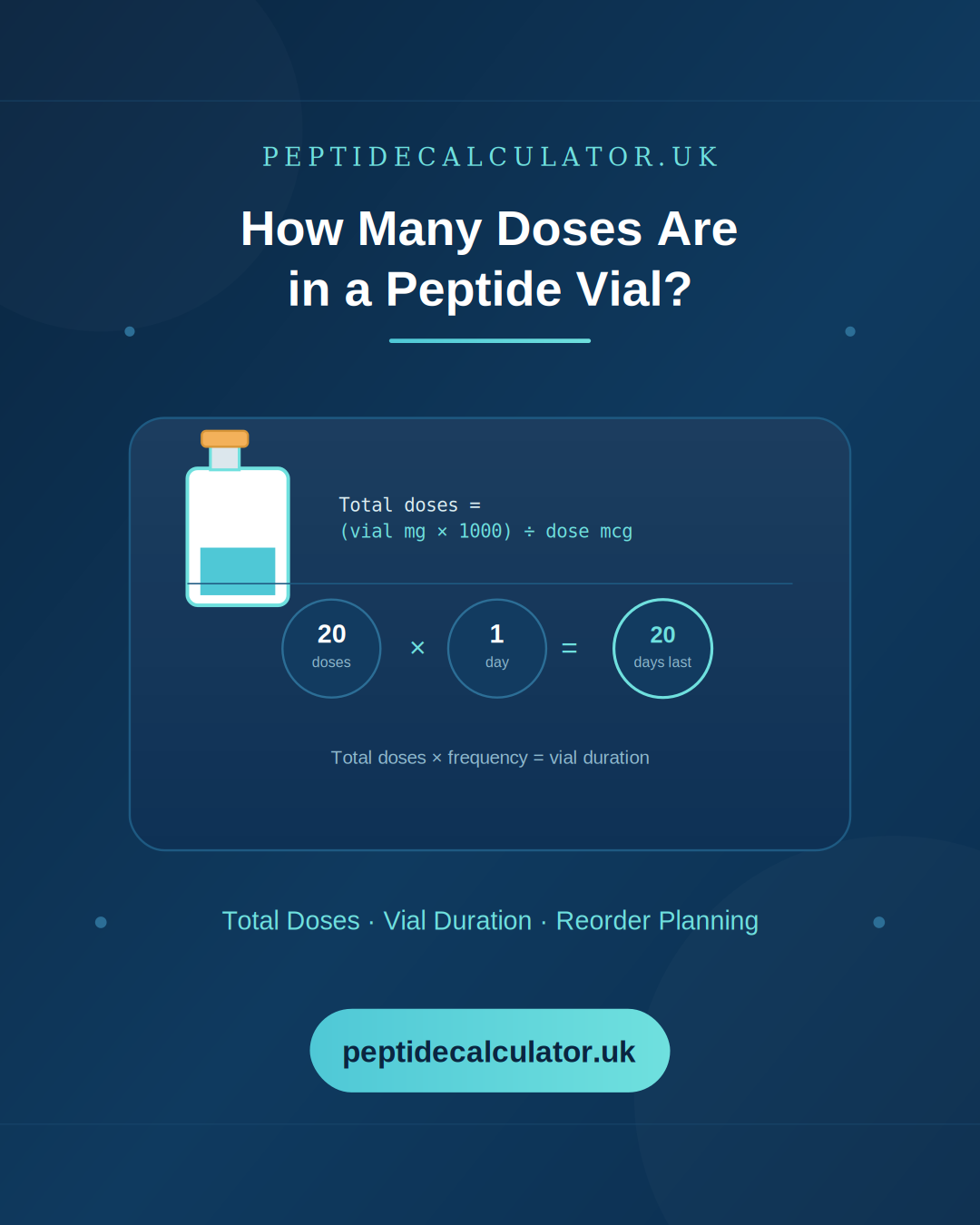
Doses per vial = (Vial mg × 1000) ÷ Target dose (mcg)Worked Example
Let's say you have a 5mg vial of peptide, and you reconstitute it with 3mL of bacteriostatic water. Your target dose is 250mcg.
- Concentration: 5mg ÷ 3mL = 1.67 mg/mL
- Units to draw: (250 ÷ 5000) × 3 × 100 = 15 units
- Doses per vial: 5000 ÷ 250 = 20 doses
So with this setup, you'd draw 15 units on a standard U-100 syringe for each 250mcg dose, and the vial would last you 20 doses total.
This is precisely the kind of calculation a peptide calculator free tool automates — no manual math required, and no risk of a conversion error between mg and mcg.
Choosing the Right Peptide Calculator
Not all calculators are built the same. When picking one, look for:
- Support for both mg and mcg inputs — you shouldn't have to convert units yourself
- A visual syringe meter — seeing exactly where to pull the plunger reduces error far more than a number alone
- Preset options for common vial sizes (1mg, 5mg, 10mg, 15mg) to save time
- Mobile-friendly or app-based access if you're prepping doses away from a desktop
- No paywall for basic calculations — most reliable tools offer a peptide calculator free of charge, with premium features (like protocol tracking or dose history) available as an upgrade
Common Mistakes This Calculator Helps You Avoid
- Confusing mg and mcg. This is the single most common — and most dangerous — dosing error. A calculator forces you to specify units explicitly.
- Assuming syringe markings are milliliters. Most syringes used for peptide work are marked in units, not mL, which trips up beginners constantly.
- Recalculating from scratch every time you change your water volume. If you decide to use 2mL instead of 3mL, your unit count for the same dose changes — a calculator updates this instantly.
- Estimating instead of calculating. "Eyeballing" a dose based on a previous batch is how inconsistent dosing happens across a protocol.
Frequently Asked Questions
Is a peptide calculator accurate for all peptides? Yes — the math is based on concentration and volume, which applies the same way regardless of which specific peptide you're working with. The calculator doesn't need to "know" the peptide, just the mg amount, water volume, and target dose.
Can I use a peptide calculator for GLP-1 medications like semaglutide or tirzepatide? Yes, the same reconstitution and dosage formulas apply. Just make sure you're using the correct vial concentration for that specific product.
What's the difference between a peptide calculator and a peptide dosage calculator? In practice, these terms are used interchangeably. Some tools separate "reconstitution" (mixing) from "dosage" (how much to inject), but most modern calculators combine both into a single workflow.
Do I need bacteriostatic water specifically? Bacteriostatic water is preferred for multi-dose vials because it contains a preservative that prevents bacterial growth, allowing the reconstituted solution to be used safely over several weeks. Sterile water without a preservative is generally intended for single-use only.
Final Thoughts
Whether you're new to peptides or have been using them for a while, a peptide calculator takes the guesswork — and the risk — out of reconstitution and dosing. Understanding the underlying formulas is valuable, but for day-to-day use, a reliable online calculator will save you time and reduce the chance of error every single time you prep a dose.
This article is for informational and educational purposes only. It is not medical advice. Always consult a licensed healthcare professional before starting, stopping, or changing any peptide protocol.