Peptide Blog Article
Peptides vs Steroids: What's the Difference? | Complete Comparison
Peptides and anabolic steroids are frequently mentioned together in discussions about fitness, recovery, and performance, but they are fundamentally different classes of compounds. Understanding these differences is essential for anyone researching peptide science or learning about how these molecules work. This educational guide explains what peptides are, what anabolic steroids are, and how they differ in molecular structure, biological mechanisms, administration methods, and regulatory status. It also explores why these compounds are often discussed together, highlights common misconceptions, and answers frequently asked questions to help readers better understand the science behind each category. Whether you're new to peptide education or looking to expand your knowledge, this guide provides a clear overview without oversimplifying the topic. You can also use the free tools available at PeptideCalculator.uk to calculate peptide reconstitution, dosage conversions, syringe units, and other peptide-related calculations while exploring our growing library of educational resources. This article is intended for general educational purposes only. It is not medical or legal advice. Always consult a qualified healthcare professional and refer to applicable regulations before making healthcare decisions.
Peptides vs Steroids: What's the Difference?
Peptides and steroids are often mentioned in the same conversations, particularly around fitness and performance contexts, but they're fundamentally different classes of molecules with different mechanisms, regulatory statuses, and use patterns. This guide breaks down the core distinctions between the two.
This article is for general education only. It is not medical advice or legal advice. Consult a licensed healthcare provider for guidance specific to your situation.
What Peptides Are
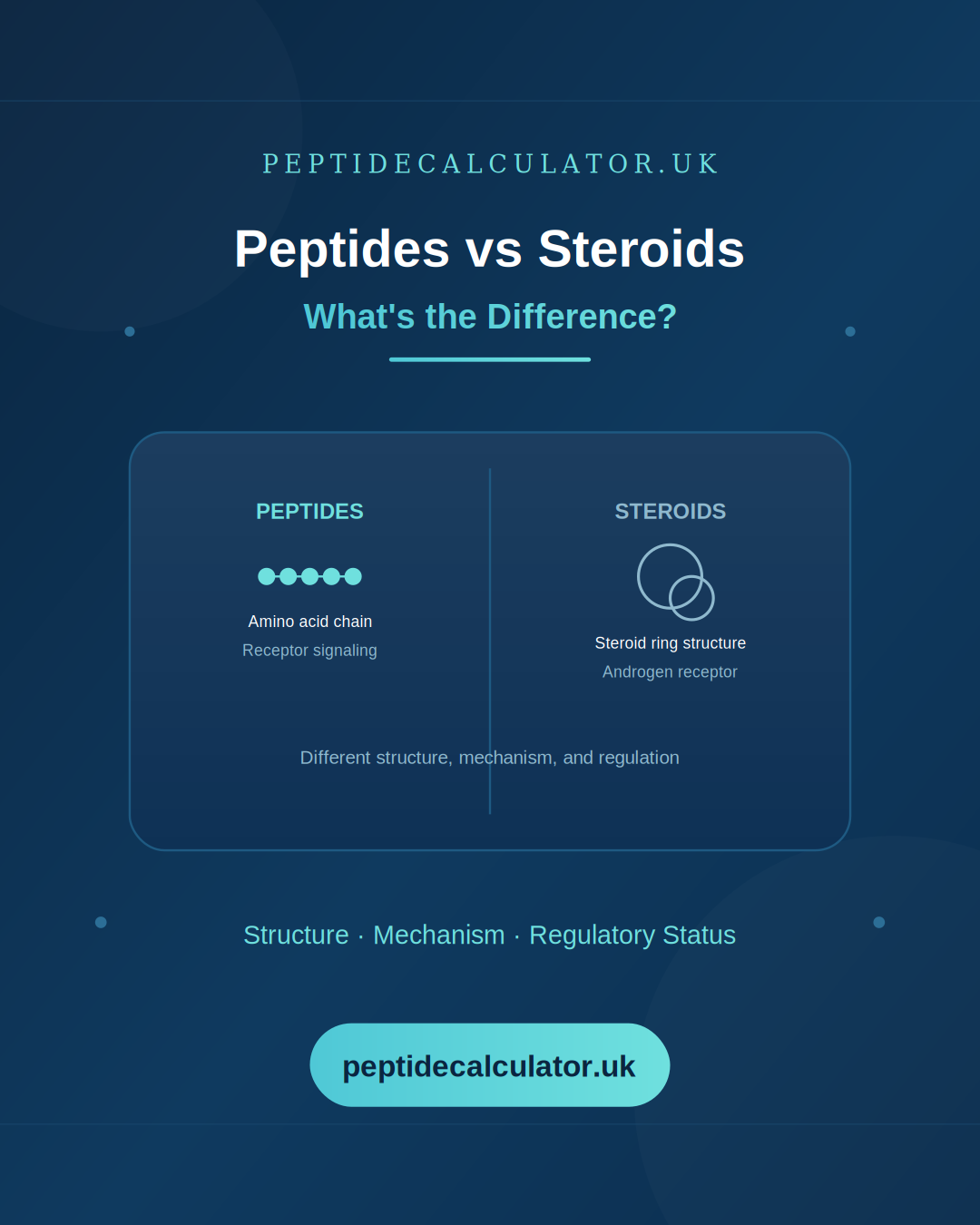
Peptides are short chains of amino acids — the same building blocks that make up proteins, just in much shorter sequences. Because of this structure, many peptides work by binding to specific receptors in the body and signaling particular biological processes, often mimicking or modulating naturally occurring hormones or signaling molecules. The specific effects of a given peptide depend entirely on its particular amino acid sequence and which receptors it interacts with.
What Steroids Are
Steroids, in the context most people mean when comparing them to peptides, typically refers to anabolic-androgenic steroids — synthetic derivatives of testosterone. Structurally, these are a completely different class of molecule from peptides, built around a steroid ring structure rather than an amino acid chain. Anabolic steroids generally work by binding to androgen receptors and influencing processes related to muscle protein synthesis.
Key Structural and Mechanistic Differences
| Peptides | Anabolic Steroids | |
|---|---|---|
| Molecular structure | Chains of amino acids | Steroid ring structure (testosterone derivatives) |
| General mechanism | Often receptor signaling, mimicking natural hormones/signals | Androgen receptor binding |
| Administration | Commonly injectable (reconstituted from lyophilized powder) | Oral or injectable, depending on the specific compound |
| Regulatory status | Varies widely by specific compound and region | Generally more heavily regulated as controlled substances in many countries |
Why They're Often Discussed Together
Peptides and steroids are frequently mentioned in the same context because some peptides are used in fitness, recovery, or performance-related discussions similarly to how steroids are — but the similarity mostly ends at the context of use, not the underlying biology. A peptide like BPC-157, for example, works through an entirely different mechanism than an anabolic steroid, even though both might come up in a conversation about physical performance or recovery.
Regulatory Status Differences
Anabolic steroids are classified as controlled substances in many countries, with well-established legal frameworks around their manufacture, sale, and possession. Peptides occupy a much more varied regulatory landscape — some are FDA-approved prescription medications (like semaglutide or tirzepatide), others are sold explicitly labeled "for research purposes only" with no approved human-use pathway, and the specific legal status varies significantly by compound and by country. This is not a fixed or simple comparison, and anyone with questions about a specific compound's legal status in their location should verify this directly through official regulatory sources rather than general assumptions.
Dosing and Administration Differences
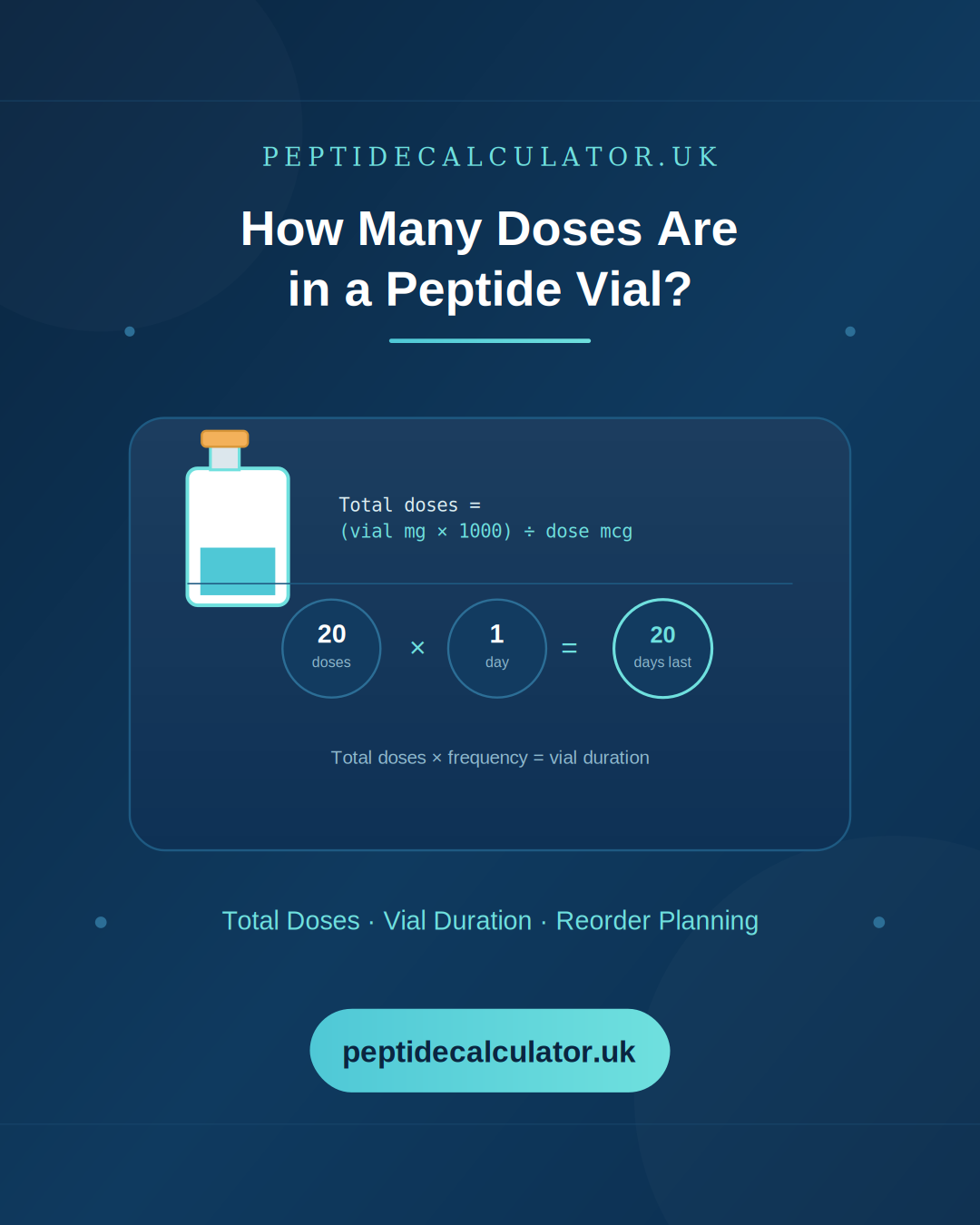
Peptide dosing, as covered throughout our other guides, typically involves reconstituting a lyophilized powder with a diluent and calculating a precise microgram or milligram dose via syringe. Steroid dosing conventions differ significantly depending on the specific compound and formulation (oral vs. injectable), and generally follow different protocols entirely from peptide reconstitution. The two shouldn't be assumed to follow similar dosing logic just because both are sometimes discussed in similar contexts.
Common Misconceptions
- Assuming all peptides work like steroids. They don't share a mechanism, structure, or typical regulatory framework.
- Assuming peptides are inherently "safer" than steroids because they're not classified the same way. Regulatory status and safety profile are separate questions, and both classes include compounds with varying levels of research and oversight.
- Treating "peptide" as a single category with one universal risk or benefit profile. Peptides range from FDA-approved prescription medications to research-only compounds, and lumping them together misses meaningful distinctions.
Frequently Asked Questions
Are peptides a type of steroid? No — they're structurally and mechanistically distinct. Peptides are amino acid chains; anabolic steroids are testosterone derivatives with a steroid ring structure.
Is one category "safer" than the other? This isn't a simple universal comparison, since both categories include a wide range of specific compounds with different research bases, regulatory statuses, and risk profiles. Safety questions are compound-specific, not category-wide.
Why are peptides and steroids often mentioned together in fitness contexts? Both are sometimes discussed in relation to physical performance, recovery, or body composition goals, even though the underlying biological mechanisms are entirely different.
Do peptides and steroids require the same kind of dosing calculations? No — peptide dosing generally involves reconstitution math (vial strength, diluent volume, syringe units), which our reconstitution guide covers in depth. Steroid dosing follows different conventions specific to that class of compounds.
Final Thoughts
Peptides and steroids are distinct classes of molecules with different structures, mechanisms, and regulatory landscapes, even though they're sometimes discussed in similar contexts. Understanding this distinction matters both for accurate information-gathering and for recognizing that "peptide" itself covers an enormously varied category, from prescription GLP-1 medications to research-only compounds, each with its own specific considerations.
This article is for general education only. It is not medical advice or legal advice. Consult a licensed healthcare provider for guidance specific to your situation.