Peptide Blog Article
What Peptides Help With Weight Loss?
"Peptides for weight loss" covers everything from FDA-approved GLP-1 medications to research-only compounds. This guide breaks down which category each one falls into and why that distinction matters.
What Peptides Help With Weight Loss?
Weight loss is probably the most searched use case in the entire peptide space right now, largely driven by the rise of GLP-1 receptor agonists. But "peptides for weight loss" actually covers a few different categories with very different evidence bases, regulatory statuses, and mechanisms — and lumping them together makes it harder to understand what you're actually looking at. This guide breaks down the main categories people are referring to.
This article is for general education only. It is not medical advice. Consult a licensed healthcare provider before starting any weight management program or using any peptide.
GLP-1 and Related Receptor Agonists — The Clinically Established Category
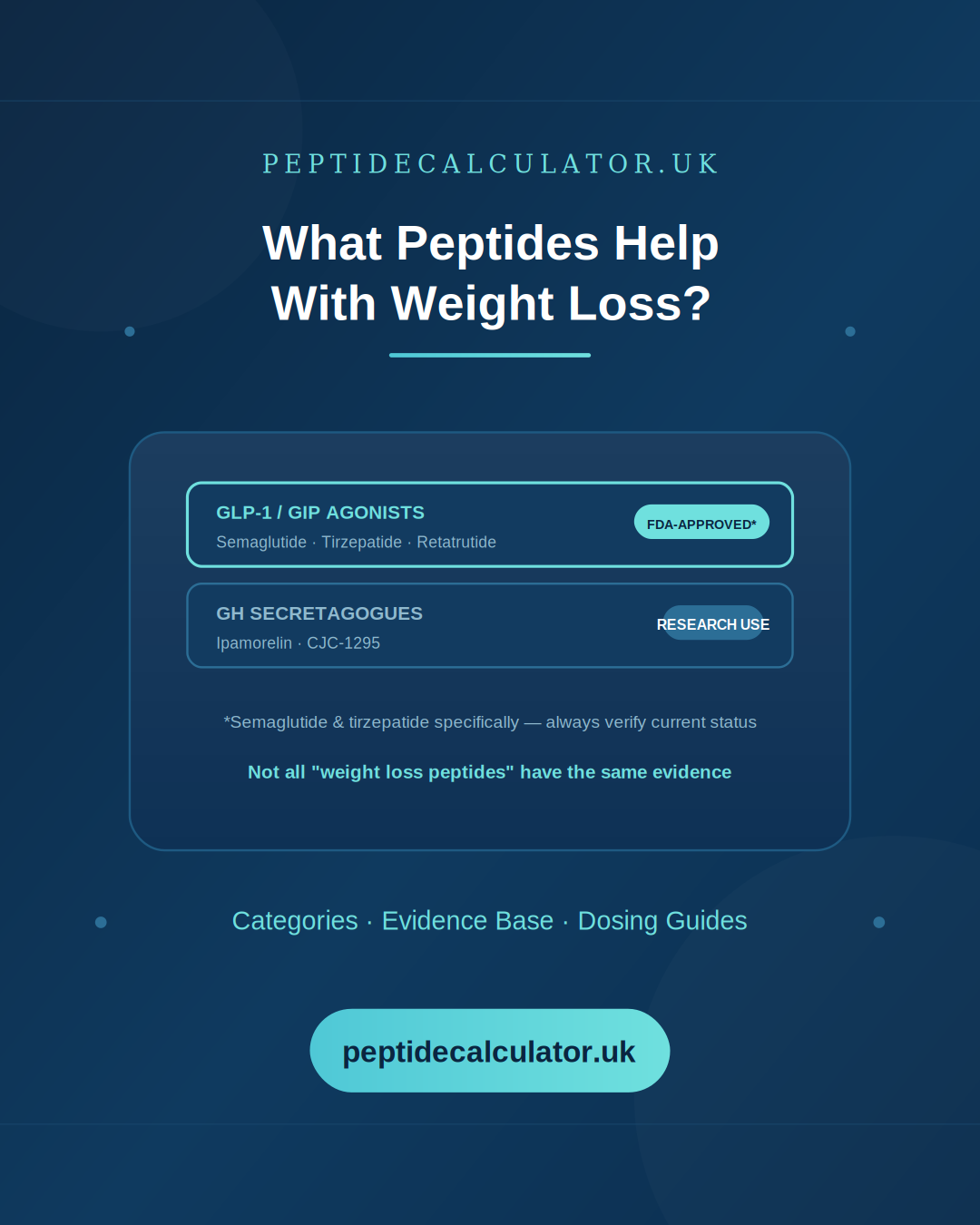
This is the category with by far the strongest evidence base and the only one that includes FDA-approved prescription medications:
- Semaglutide — a GLP-1 receptor agonist, approved for both blood sugar management and chronic weight management under specific brand names and dosing protocols.
- Tirzepatide — a dual GLP-1/GIP receptor agonist, also FDA-approved for similar indications.
- Retatrutide — a newer triple agonist (GLP-1/GIP/glucagon) currently further along in clinical development, with growing but still-evolving research.
These compounds work by mimicking gut hormones involved in appetite regulation and blood sugar control, and they're the only peptides in this weight-loss discussion backed by large-scale clinical trials and formal regulatory approval (for semaglutide and tirzepatide specifically). If you're using any of these under a prescription, our semaglutide, tirzepatide, and retatrutide guides cover the reconstitution and dosing math for vial-based formulations.
Growth Hormone Secretagogues — A Different Mechanism Entirely
Peptides like ipamorelin and CJC-1295 work through a completely different pathway — stimulating growth hormone release rather than acting on GLP-1 or GIP receptors. These are sometimes discussed in body composition contexts, but they're not GLP-1 medications and shouldn't be assumed to work the same way or have the same evidence base. See our ipamorelin & CJC-1295 guide for the dosing specifics on this category.
Why the Distinction Matters
Conflating GLP-1 medications with research-only compounds in a single "peptides for weight loss" bucket obscures a genuinely important difference: one category has gone through formal clinical trials and regulatory review for this specific use, while the other is generally discussed in a research context without the same level of established evidence for weight management specifically. This isn't a minor technicality — it affects how much confidence you should place in any claims about a specific compound's effectiveness for this purpose.
The Reconstitution Math Is the Same Across Categories
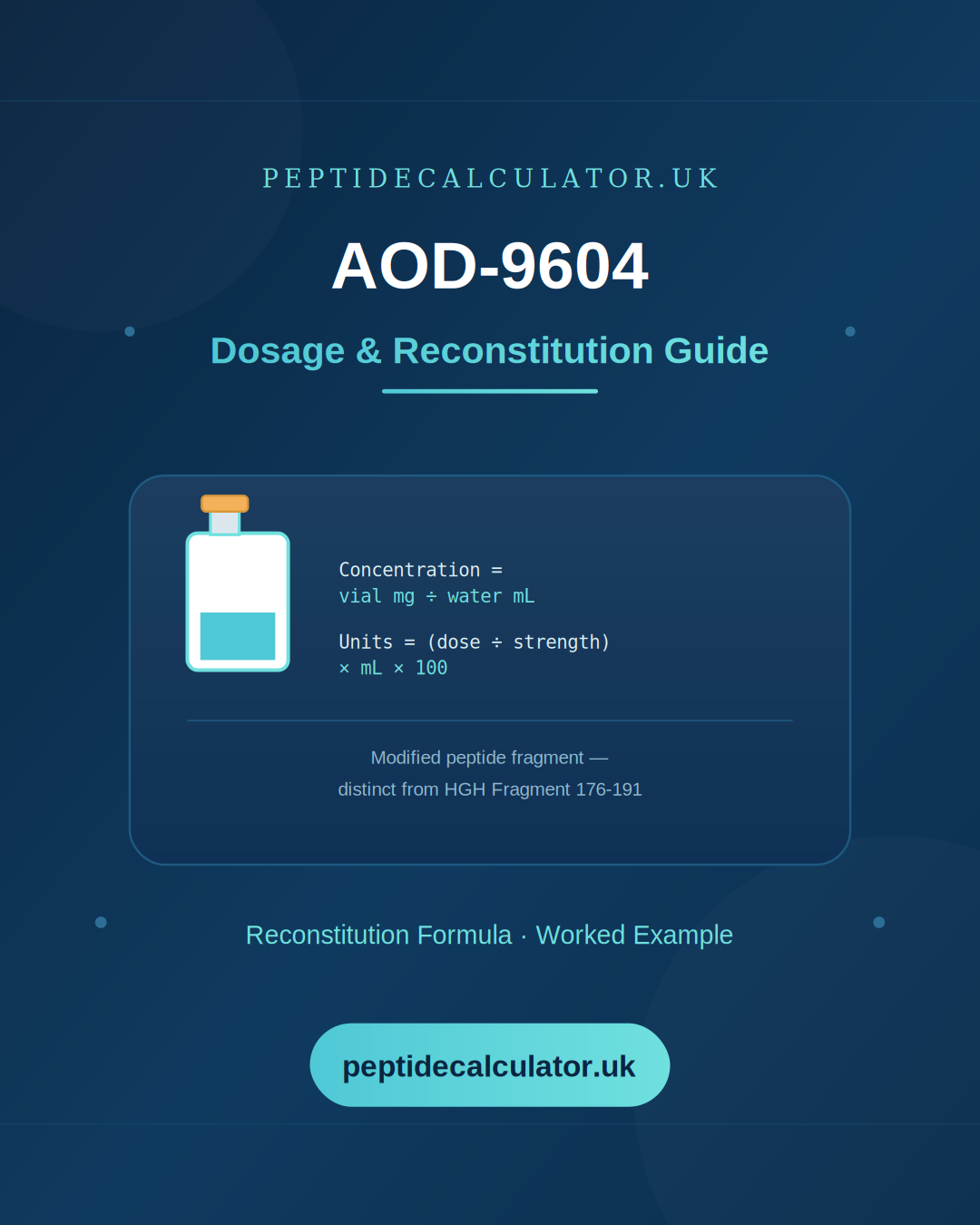
Regardless of which category a specific peptide falls into, the underlying reconstitution and dosing calculation follows the same formula:
Concentration (mg/mL) = Vial strength (mg) ÷ Diluent added (mL)
Units to draw = (Target dose ÷ Vial strength) × Diluent (mL) × 100
A peptide calculator handles this math the same way whether you're working with a prescription GLP-1 vial or a research compound — what differs between compounds is the evidence base and regulatory context, not the arithmetic.
What to Actually Verify Before Using Any Weight-Loss Peptide
- Is this compound FDA-approved for this specific use, or is it a research-only product?
- Do I have a prescription and medical supervision, if the compound requires one?
- What does the actual clinical evidence say about this specific compound, rather than general claims made about "peptides" as a category?
- Am I sourcing from a legitimate pharmacy or supplier, particularly important for prescription medications where compounded formulations vary in quality and consistency?
Common Misconceptions
- Assuming all "weight loss peptides" have similar evidence behind them. GLP-1 medications have a substantially different research and regulatory history than research-only compounds.
- Assuming a peptide's popularity online reflects its clinical evidence. These are separate things — search volume doesn't equal proven efficacy.
- Treating dosing information found online as a substitute for prescriber guidance, especially for regulated medications like semaglutide and tirzepatide.
Frequently Asked Questions
Which weight-loss peptides are actually FDA-approved? Semaglutide and tirzepatide are FDA-approved for chronic weight management under specific brand names and prescribing protocols. Retatrutide is in a later stage of clinical development but check current status, since this can change.
Are growth hormone secretagogues effective for weight loss? These work through a different mechanism than GLP-1 medications and are generally discussed in a research context rather than being established, approved weight-loss treatments. Always look at the specific evidence for a specific compound rather than generalizing.
Do I need a prescription for weight-loss peptides? FDA-approved medications like semaglutide and tirzepatide require a prescription and medical supervision. Research-only compounds are sold without a prescription pathway but also lack the same regulatory oversight and evidence base for this specific use.
How do I calculate my dose if I'm using a compounded vial rather than a pre-filled pen? The same reconstitution formula applies — see our reconstitution guide for the full walkthrough, and always follow your prescriber's exact directed dose rather than a general example.
Final Thoughts
"Peptides for weight loss" spans a genuinely wide range, from FDA-approved GLP-1 medications with substantial clinical trial data to research compounds with a much less established evidence base for this specific purpose. Understanding which category a specific compound falls into — and getting your dosing information from a legitimate prescriber when applicable — matters more than treating "peptides" as a single interchangeable category.
This article is for general education only. It is not medical advice. Consult a licensed healthcare provider before starting any weight management program or using any peptide.