Peptide Blog Article
HGH Fragment 176-191 Calculator: Dosing Guide
HGH Fragment 176-191 is a modified peptide requiring precise reconstitution math, and it's closely related to — but distinct from — AOD-9604. This guide covers the calculator formula, a full worked example, and common dosing mistakes.
HGH Fragment 176-191 Calculator: Dosing Guide
HGH Fragment 176-191 is a modified peptide segment that follows the same reconstitution and syringe-draw math used across peptide dosing generally, though it's frequently discussed alongside its closely related counterpart, AOD-9604. This guide covers the formula, a worked example, and how to keep the two compounds' dosing math separate.
This article is for general education only. It is not medical advice. HGH Fragment 176-191's regulatory status varies by region and use case. Consult a licensed healthcare provider before using any peptide.
The Reconstitution Formula
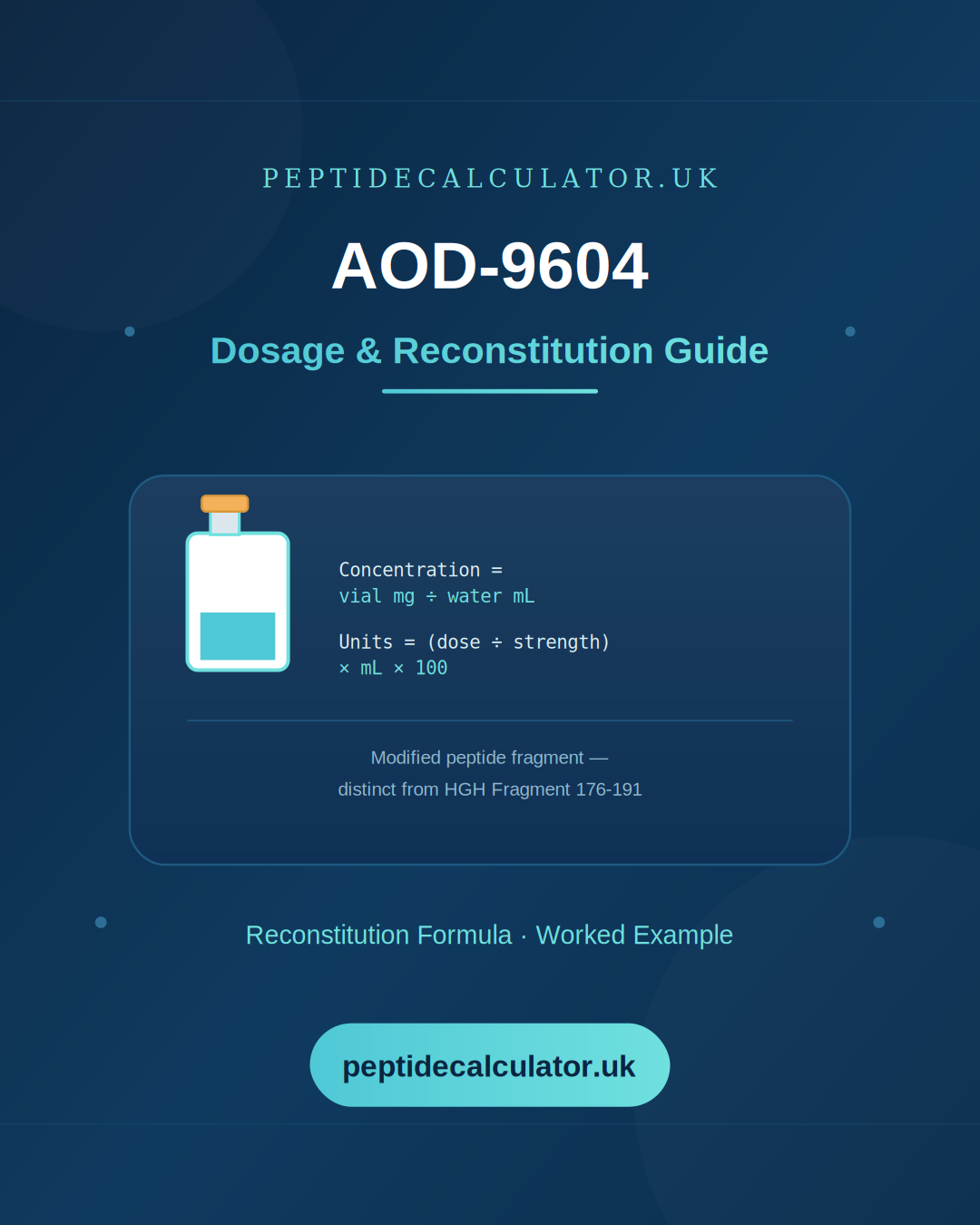
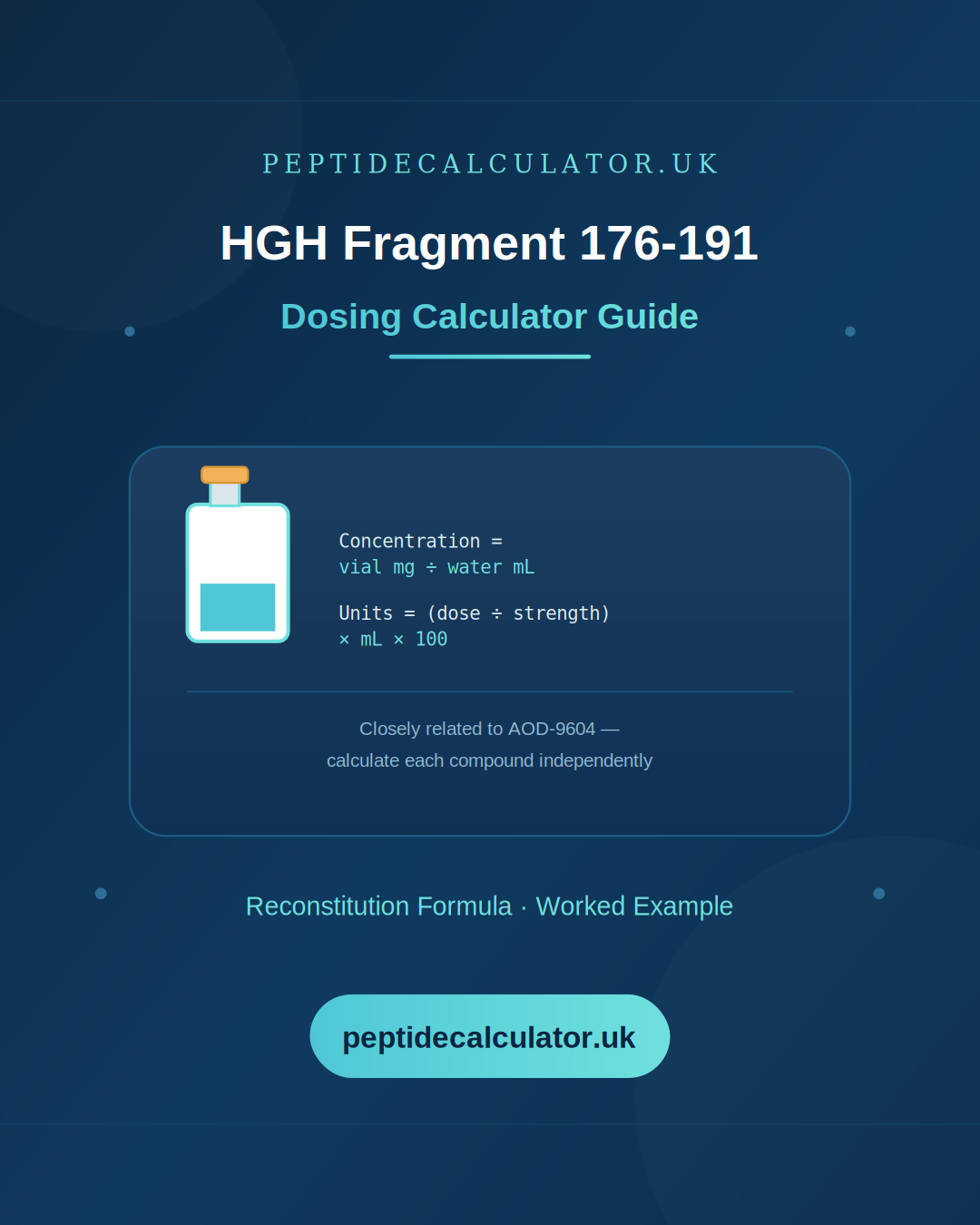
Concentration (mg/mL) = Total HGH Fragment 176-191 in vial (mg) ÷ Bacteriostatic water added (mL)
Units to draw = (Target dose in mcg ÷ (Vial mg × 1000)) × Water added (mL) × 100
Worked Example
Suppose you have a 5mg vial of HGH Fragment 176-191, reconstituted with 2mL of bacteriostatic water, and your target dose is 300mcg.
Units to draw = (300 ÷ 5,000) × 2 × 100 = 12 unitsSo you'd draw 12 units on a U-100 syringe. A HGH fragment 176-191 calculator automates this formula — enter your vial strength, water volume, and target dose to get an accurate syringe reading. If any of the underlying conversions are unclear, our mg to mcg conversion guide and units-to-syringe guide cover those steps individually.
HGH Frag Vial Size Considerations
HGH Fragment 176-191 is available in a range of vial strengths, and the right choice depends on your intended dose, how many total doses you want from a vial, and how concentrated a solution is practical for you to measure. Testing a few vial-size and water-volume combinations through a HGH frag calculator before purchasing helps you land on a setup that gives a convenient, repeatable syringe draw.
How to Reconstitute HGH Fragment 176-191
- Bring the vial and bacteriostatic water to room temperature.
- Sanitize both vial tops with an alcohol swab.
- Draw your chosen volume of bacteriostatic water.
- Inject the water slowly down the inside vial wall to minimize foaming.
- Swirl gently until fully dissolved — never shake.
- Label the vial with the reconstitution date and calculated concentration.
- Store refrigerated, protected from light.
For a more detailed general walkthrough, see our full reconstitution guide.
HGH Fragment 176-191 vs. AOD-9604: Keeping the Math Separate
AOD-9604 is a modified version of HGH Fragment 176-191, and the two are often discussed together — but they are distinct products with their own typical vial strengths and dosing conventions. A unit count calculated for one does not automatically apply to the other. Always confirm which specific compound your vial actually contains, and calculate its dosing independently. See our AOD-9604 calculator guide for that compound's own dedicated formula walkthrough.
Storage Guidelines
Once reconstituted, HGH Fragment 176-191 should be refrigerated and used within the timeframe specified in your supplier's product documentation. As with other peptides, cloudiness, discoloration, or visible particles indicate a vial should no longer be used, regardless of how much time has passed since mixing.
Common Mistakes With HGH Fragment 176-191 Dosing
- Miscalculating mg-to-mcg. This remains the most common source of a significant dosing error across peptides generally.
- Confusing HGH Fragment 176-191 with AOD-9604 dosing figures. These are related but separate products and should always be calculated independently.
- Not testing vial size against your intended protocol length before purchasing.
- Skipping vial labeling, which makes it easy to lose track of your exact concentration and calculations over time.
Frequently Asked Questions
Is HGH Fragment 176-191 dosed the same way as AOD-9604? The reconstitution and syringe-draw formula structure is the same across both, but their typical vial strengths and dosing conventions differ — always use the actual labeled strength of your specific vial rather than assuming the two are interchangeable.
How much bacteriostatic water should I use? This depends on your target dose and preferred syringe reading. A HGH fragment dosage calculator lets you test a few water volumes to find a practical, repeatable measurement.
Can I use a general peptide calculator for HGH Fragment 176-191? Yes — as long as it accepts your vial's specific mg strength, water volume, and target mcg dose, rather than assuming fixed values.
How long does reconstituted HGH Fragment 176-191 last? This varies by manufacturer. Always check your specific product's documentation rather than assuming a universal shelf life.
Final Thoughts
HGH Fragment 176-191's reconstitution math follows the same core formula used across peptide dosing generally, but because it's closely related to — yet distinct from — AOD-9604, confirming exactly which compound your vial contains matters before running any calculation. Use a peptide calculator to verify your syringe draw for your specific vial and target dose every time.
This article is for general education only. It is not medical advice. Consult a licensed healthcare provider before using any peptide.