Peptide Blog Article
TB-500 Calculator: Dosage & Reconstitution Guide
TB-500 is commonly used in a loading-phase protocol, which makes accurate reconstitution math especially important. This guide covers the formula, a worked example, and common dosing mistakes.
TB-500 Calculator: Dosage & Reconstitution Guide
TB-500 is commonly discussed alongside a loading-phase protocol structure, where doses are administered more frequently for an initial period before dropping to a lower maintenance frequency. This structure makes accurate reconstitution math especially important — since you're often recalculating vial duration and dose timing across two different phases rather than a single flat schedule. This guide covers the formula, a worked example, and the practical details around loading-phase planning and storage.
This article is for general education only. It is not medical advice. TB-500 is not an FDA-approved drug and is intended for research purposes. Consult a licensed healthcare provider before using any peptide.
The Reconstitution Formula
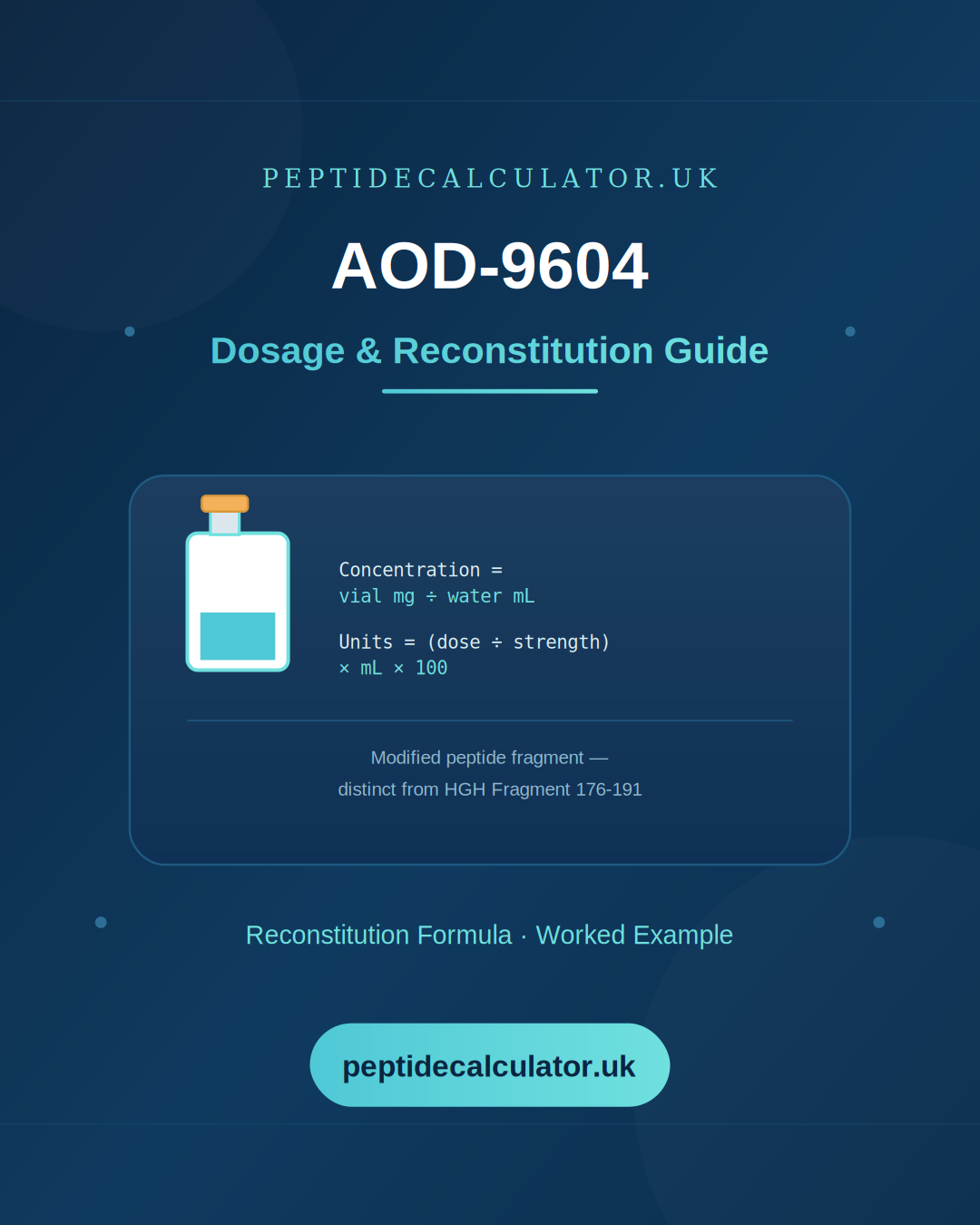
Concentration (mg/mL) = Total TB-500 in vial (mg) ÷ Bacteriostatic water added (mL)
Units to draw = (Target dose in mcg ÷ (Vial mg × 1000)) × Water added (mL) × 100
Worked Example
Suppose you have a 5mg vial of TB-500, reconstituted with 2mL of bacteriostatic water, and your target dose is 250mcg.
Units to draw = (250 ÷ 5,000) × 2 × 100 = 10 unitsSo you'd draw 10 units on a U-100 syringe per dose. A TB-500 calculator automates this so you only need to enter your vial strength, water volume, and target dose — no manual arithmetic required. If the mg-to-mcg step is still unclear, our conversion guide covers that separately.
Understanding the Loading Phase Structure
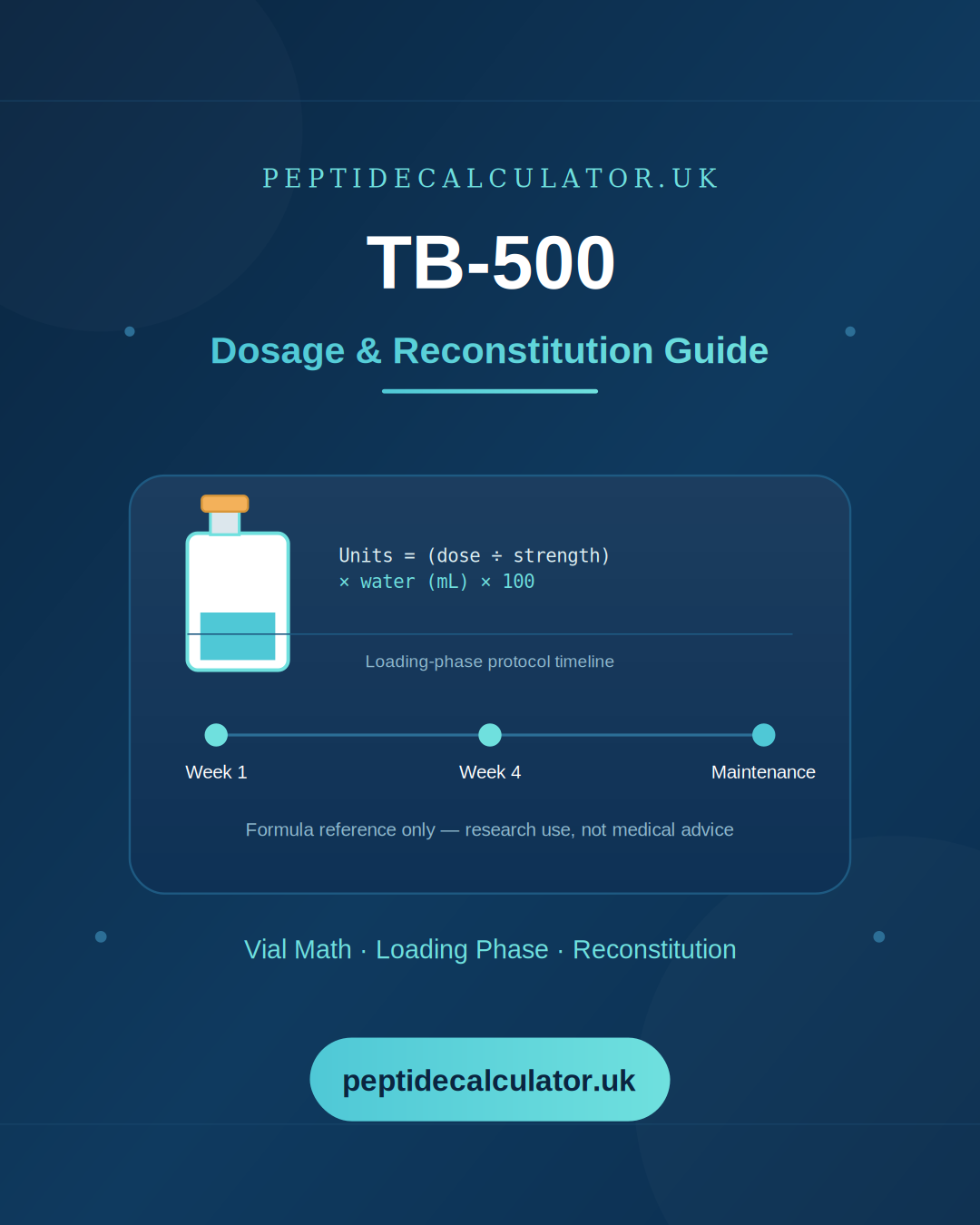
TB-500 protocols are frequently discussed in two phases:
- Loading phase — typically a period of more frequent dosing (often weekly) for the first several weeks
- Maintenance phase — a reduced dosing frequency (often every 2–4 weeks) that follows the loading phase
This two-phase structure directly affects your vial math, because the number of doses your vial needs to last changes between phases. A vial calculated to last a fixed number of weeks during loading will stretch much further once you drop to maintenance frequency — which means your reconstitution volume decisions should account for both phases, not just the initial one.
Worked Example — Vial Duration Across Phases
Say you have a 5mg vial reconstituted with 2mL of water, dosing 250mcg per injection (10 units, from the example above).
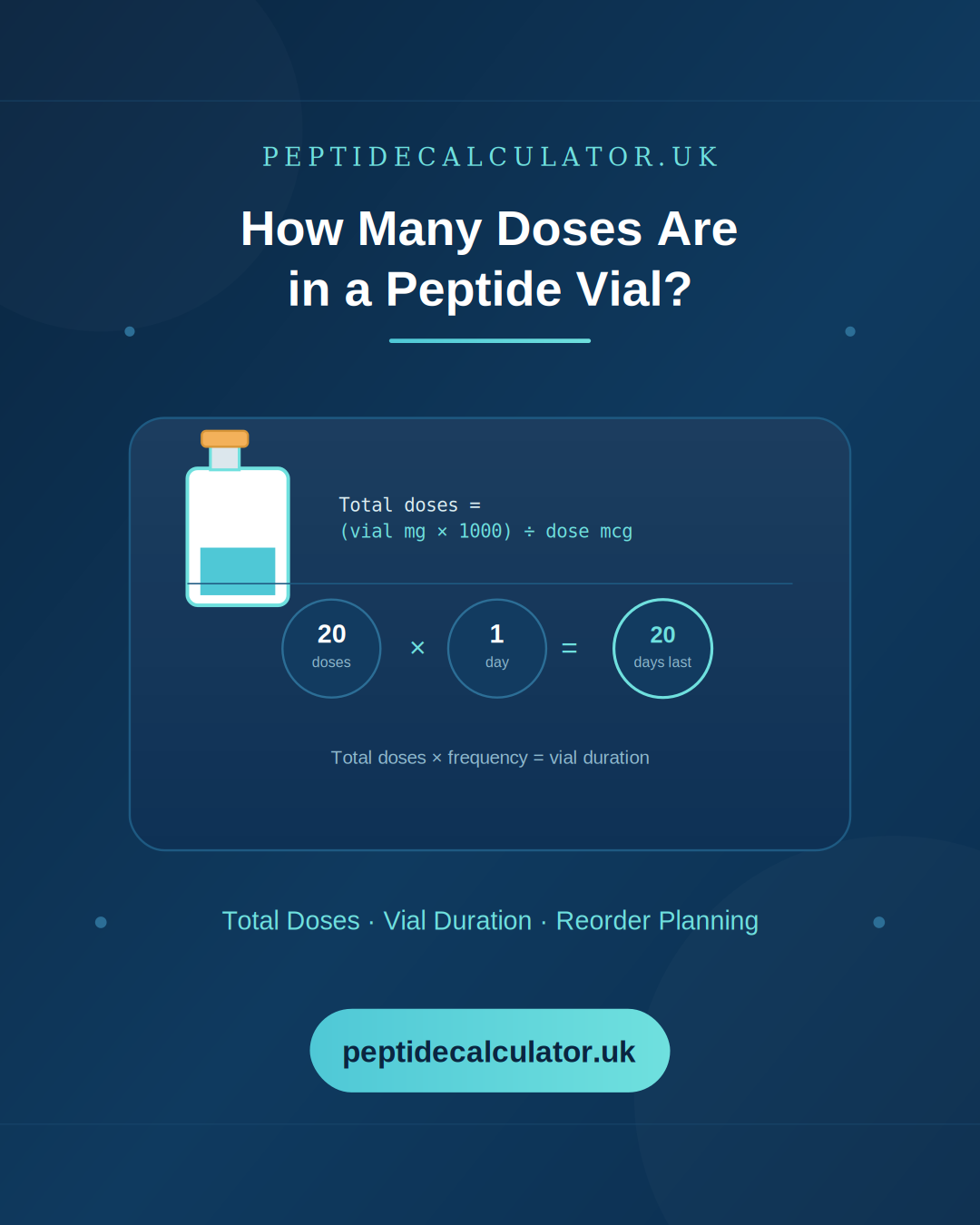
Total doses in vial = 5,000mcg ÷ 250mcg = 20 dosesIf your loading phase uses 1 dose per week for 4 weeks, that's 4 doses used, leaving 16 doses remaining. At a maintenance frequency of 1 dose every 2 weeks, those remaining 16 doses would last an additional 32 weeks. Planning this out in advance — rather than reconstituting one vial at a time without a duration estimate — helps you decide whether a 5mg or 10mg vial makes more sense for your intended timeline.
How to Reconstitute TB-500
- Bring the vial and bacteriostatic water to room temperature.
- Sanitize both vial tops with an alcohol swab.
- Draw your chosen volume of bacteriostatic water.
- Inject the water slowly down the inside vial wall to minimize foaming.
- Swirl gently until fully dissolved — never shake.
- Label the vial with the reconstitution date and calculated concentration.
- Store refrigerated, protected from light.
For more detail on this general process, see our full reconstitution guide.
TB-500 vs. BPC-157 Stack Dosing
TB-500 is sometimes used alongside BPC-157 as part of the same protocol. If you're calculating a stack, treat each peptide's reconstitution and dosing math independently — the two compounds have different typical vial strengths and dose ranges, and combining them into a single calculation risks conflating two separate numbers. See our BPC-157 dosage calculator guide for that compound's specific formula walkthrough, and calculate each one's syringe draw separately even if you're injecting them close together.
Storage After Mixing
Once reconstituted, TB-500 should be refrigerated and used within the timeframe specified in your supplier's product documentation. Watch for cloudiness, discoloration, or visible particles, which are signs a vial should no longer be used regardless of how much time has passed since mixing.
Common Mistakes With TB-500 Dosing
- Not planning vial size around the two-phase structure. A vial sized only for the loading phase may leave you reconstituting a new one sooner than expected once you enter maintenance dosing.
- Miscalculating mg-to-mcg. As with any peptide, this is the most common source of a significant dosing error.
- Combining TB-500 and BPC-157 math into a single calculation. Each compound needs its own independent formula, even in a shared protocol.
- Losing track of which phase you're in. Since dosing frequency changes between loading and maintenance, keeping a written log of which phase applies helps avoid defaulting back to the more frequent schedule out of habit.
Frequently Asked Questions
How is TB-500 dosing frequency different from a standard peptide protocol? The commonly discussed loading-then-maintenance structure means dosing frequency decreases partway through a protocol, which is different from peptides dosed at a single consistent frequency throughout. This is a general pattern often referenced for TB-500 — always base your actual schedule on your specific protocol source.
Can I use a standard peptide calculator for TB-500's two-phase dosing? Yes — the reconstitution and syringe-draw formula itself doesn't change between phases. What changes is how often you're using it. A TB-500 dosage calculator that also estimates total doses per vial can help you plan vial size around both phases in advance.
How much bacteriostatic water should I use for TB-500? This depends on your target dose and preferred syringe reading. Since a single vial may need to serve both loading and maintenance phases, it's worth calculating total doses per vial before deciding on a water volume, so the resulting unit count stays practical across both frequencies.
Is it safe to combine TB-500 and BPC-157 in the same vial? This is a protocol design decision, and combining peptides in a single vial requires tracking two separate concentrations within a shared volume — similar to combined-vial stacking with other peptide pairs. If you choose to do this, calculate both compounds' concentrations independently before combining.
Final Thoughts
TB-500's commonly discussed loading-then-maintenance structure adds a planning layer beyond a standard single-frequency peptide protocol — your vial size and reconstitution volume ideally account for both phases from the start. Running your numbers through a TB-500 calculator before you begin, rather than recalculating reactively partway through, makes it easier to choose a vial size and water volume that carries you through the full protocol.
This article is for general education only. It is not medical advice. TB-500 is not an FDA-approved drug and is intended for research purposes. Consult a licensed healthcare provider before using any peptide.