Peptide Blog Article
How Long Do Reconstituted Peptides Last?
Once a peptide has been reconstituted, its storage requirements change significantly compared to its lyophilized (freeze-dried) form. Understanding how refrigeration, light exposure, diluents, and handling practices affect stability can help you plan reconstitution timing and reduce unnecessary waste. This guide explains the factors that influence the shelf life of reconstituted peptides, the differences between bacteriostatic and sterile water, proper storage recommendations, common mistakes to avoid, and visible signs that a vial should no longer be used. It also covers practical planning strategies, including how vial duration and dosing frequency work together when deciding when to reconstitute a new vial. Whether you're learning about peptide storage or looking for better organization, this educational guide provides clear explanations to help you understand the underlying concepts. You can also use the free tools available at PeptideCalculator.uk to calculate reconstitution volumes, estimate vial duration, determine doses per vial, and simplify peptide-related calculations. This content is provided for general educational purposes only and does not constitute medical advice.
How Long Do Reconstituted Peptides Last?
Once a peptide vial is reconstituted, its stable shelf life is no longer measured in the months-to-years timeframe of the dry, lyophilized powder — it drops to a window of days to a few weeks, depending on the specific compound and how it's stored. This guide covers what affects that window, the signs a reconstituted vial should no longer be used, and how to plan your reconstitution timing around it.
This article is for general education only. It is not medical advice. Always follow the specific storage instructions provided by your product's manufacturer.
Why Reconstitution Changes the Shelf Life Timeline
In its lyophilized (freeze-dried) powder form, a peptide is chemically much more stable and can typically be stored for extended periods, often specified by the manufacturer as months when kept refrigerated or frozen and protected from light. Once reconstituted with bacteriostatic water, the peptide is now in a liquid state, which introduces a much shorter stability window — this is why suppliers consistently specify a separate, shorter shelf life for the reconstituted solution compared to the unmixed powder.
What Affects Reconstituted Shelf Life
- Refrigeration consistency — reconstituted peptides are generally expected to be kept refrigerated continuously; repeated warming and re-cooling can shorten stability.
- Light exposure — many peptides are light-sensitive, which is why vials are often amber-tinted or stored in dark packaging.
- The specific compound itself — stability windows vary between peptides, so a figure that applies to one compound doesn't necessarily apply to another.
- The diluent used — bacteriostatic water (which contains a preservative) generally supports longer multi-dose stability than sterile water without a preservative, which is typically intended for single-use only.
- Contamination risk during drawing — each time a syringe accesses the vial, there's a small opportunity for contamination if sterile technique isn't followed carefully.
General Guidance vs. Product-Specific Instructions
There's no single universal number that applies to every peptide's reconstituted shelf life — it varies by compound and manufacturer. Rather than relying on a general rule of thumb, always check the specific documentation that came with your product, since suppliers typically test and specify stability windows for their own formulations. If this information isn't clearly provided, that's worth confirming directly with the supplier before assuming a stability window.
Signs a Reconstituted Vial Should No Longer Be Used
Regardless of how much time has passed, watch for:
- Cloudiness in a solution that was originally clear
- Discoloration from the original color
- Visible particles or sediment
- An unusual odor, if noticeable
Any of these signs indicate the vial should be discarded, even if it's still within an expected timeframe.
Planning Reconstitution Timing Around Shelf Life
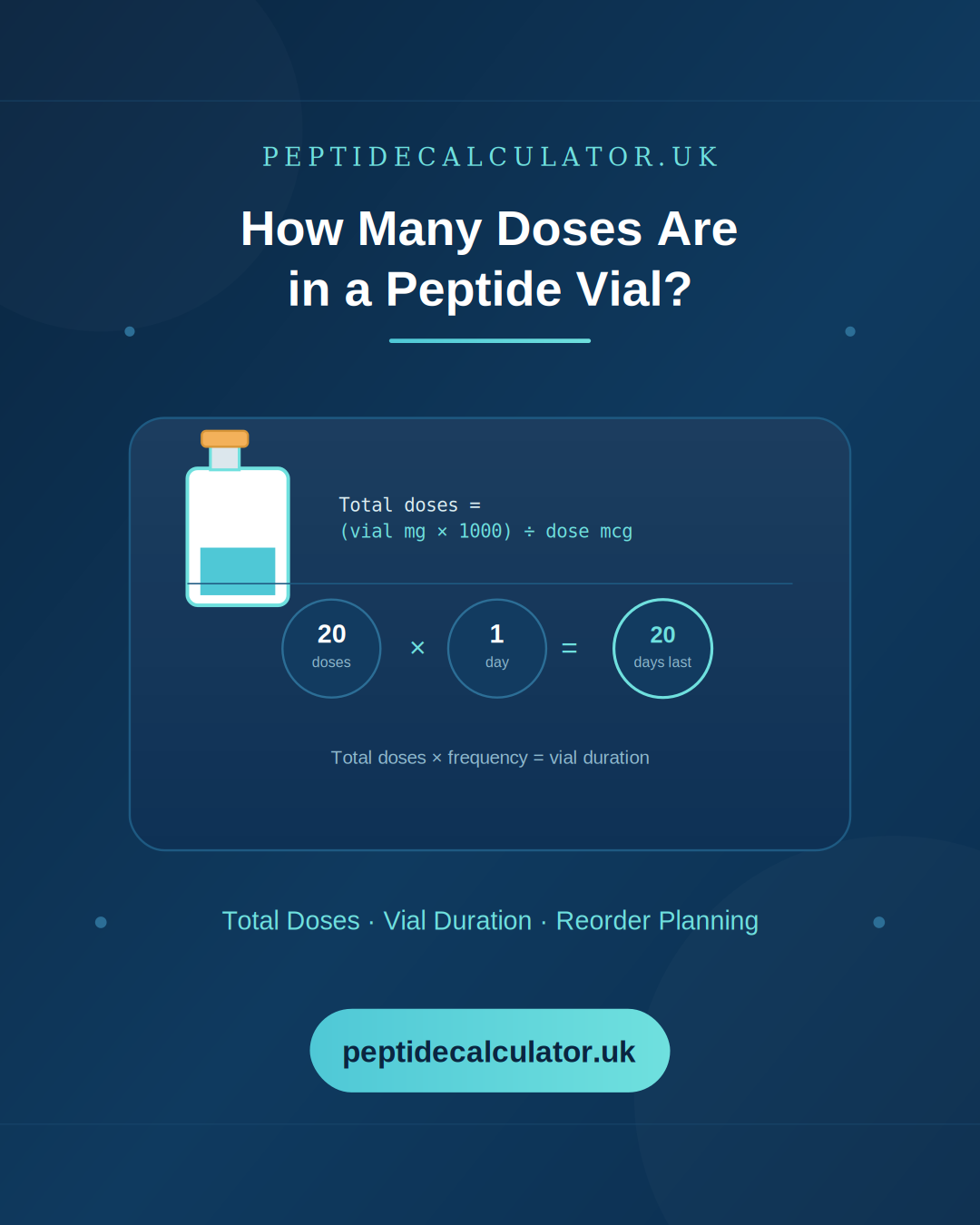
Since reconstituted peptides have a limited window, it's worth reconstituting only what you'll realistically use within that timeframe rather than mixing an entire large vial if your usage rate means much of it would go unused before the stability window closes. This connects directly to vial size planning — see our doses-per-vial guide for how to calculate how long a given vial will last at your intended dosing frequency, so you can compare that against your product's specified shelf life before choosing a vial size.
Storage Best Practices
- Refrigerate immediately after reconstitution and keep it refrigerated consistently — avoid leaving it at room temperature for extended periods.
- Keep it protected from light, using the original packaging or an opaque container if needed.
- Label the vial with the reconstitution date, so you have a clear reference point for tracking elapsed time.
- Use sterile technique for every draw to minimize contamination risk across multiple uses.
- Don't freeze reconstituted solutions unless specifically instructed by the manufacturer — freezing can affect peptide stability differently than refrigeration.
Common Mistakes With Reconstituted Peptide Storage
- Assuming a shelf-life figure from one peptide applies to another. Always check the specific product's documentation.
- Inconsistent refrigeration, such as leaving a vial out for extended periods between doses.
- Not labeling the reconstitution date, making it difficult to track elapsed time accurately.
- Continuing to use a vial that shows visible signs of degradation, even if it's technically still within an expected timeframe.
- Reconstituting a larger vial than you'll realistically use within the stability window, leading to waste.
Frequently Asked Questions
Does bacteriostatic water extend shelf life compared to sterile water? Bacteriostatic water contains a preservative that helps prevent bacterial growth across multiple draws, which is why it's generally used for multi-dose vials rather than sterile water, which lacks this preservative and is typically intended for single-use.
Can I freeze a reconstituted peptide to extend its shelf life? Unless your specific product's manufacturer instructions say otherwise, freezing isn't generally recommended for reconstituted solutions, since it can affect stability differently than standard refrigeration. Always follow your product's specific guidance.
What should I do if I'm not sure how long my reconstituted vial has been stored? If you can't confirm the reconstitution date or storage conditions with confidence, it's safer to reconstitute a fresh vial than to use one with uncertain history — particularly if it shows any signs of cloudiness, discoloration, or unusual appearance.
Is it better to reconstitute a smaller vial more frequently, or a larger one less often? This depends on your product's specific shelf-life window and your dosing frequency. Calculating your vial duration against the stability window (see our doses-per-vial guide) helps you decide which approach minimizes waste for your specific situation.
Final Thoughts
Reconstitution significantly shortens a peptide's stable shelf life compared to its dry powder form, and that window varies by compound and manufacturer rather than following a single universal rule. Checking your specific product's documentation, storing consistently, and watching for visible signs of degradation are the most reliable ways to use your reconstituted peptide safely within its intended window.
This article is for general education only. It is not medical advice. Always follow the specific storage instructions provided by your product's manufacturer.